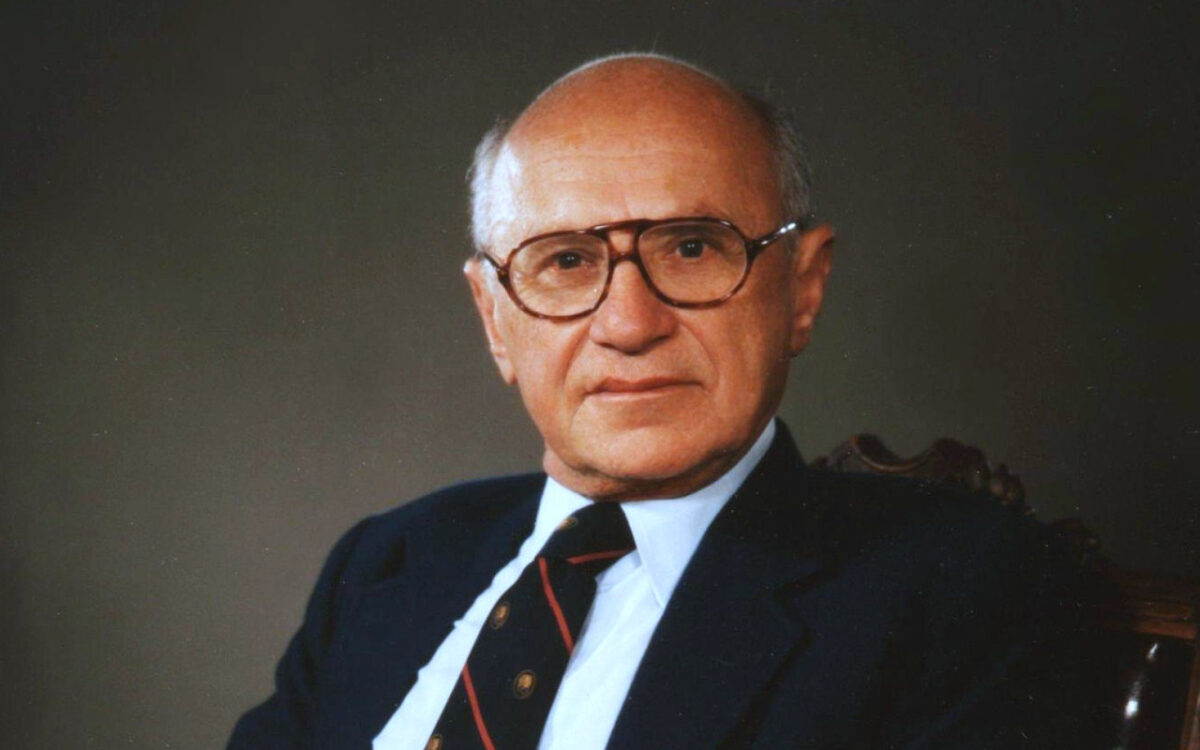
With thanks to the writings of Milton Friedman and Elon Musk’s Grok.
The debate between socialism and capitalism is often reduced to slogans. Socialism is presented as compassion for working people; capitalism as freedom, initiative, and reward for enterprise. Both claims contain part of the truth. Yet the more important question is not whether a society will have wealth, inequality, or power. Every society has all three.

The real question is whether power is dispersed or concentrated; whether citizens may challenge those who exercise it; and whether the law protects ordinary people from both political tyranny and private privilege.
That question leads to an important conclusion. Marxist socialism and crony capitalism can both facilitate oligarchy, but they reach that destination by different routes. Marxist socialism concentrates economic power in the state, which then places it in the hands of a political class. Capitalism becomes corrupt when wealthy private interests use government power to suppress competitors and secure special favors. The proper alternative is neither command-and-control socialism nor a corporate free-for-all. It is a constitutional market economy built on private property, voluntary exchange, genuine competition, impartial law, and limits on both political and corporate power.
An oligarchy is rule by a small group. That group may consist of party officials, military leaders, aristocrats, financiers, corporate executives, or politically connected families. The defining fact is not what the group calls itself, or the ideology it professes, but that a relatively small number of people exercise disproportionate control over the lives and opportunities of everyone else.
A monarchy is rule by one person—traditionally a king, queen, or emperor. An absolute monarchy gives the ruler broad personal authority. A constitutional monarchy, by contrast, limits the monarch through law, representative government, and established institutions. Thus, monarchy does not always mean tyranny, but it begins with rule concentrated in one office.
A monopoly is economic dominance by one supplier. An oligopoly exists when a small number of firms dominate a market. These are not identical to political oligarchy, but they can become connected. When powerful firms use their wealth to influence lawmaking, regulation, taxation, licensing, or public contracts, economic concentration becomes political concentration. Think about how the large hospital systems and health insurance companies operate in every state in our country including Idaho.
In short, monarchy concentrates political power in one ruler; oligarchy concentrates it in a few rulers; monopoly concentrates economic power in one supplier. The greatest danger comes when political and economic power are joined in the same hands.
Marxist socialism begins with a legitimate concern: wealth can create unequal influence. An employer may possess more bargaining power than a worker. A major financier may influence public policy more than an ordinary citizen. A corporation may grow powerful enough to shape the rules under which it operates.
Marxism proposes to correct this by abolishing or sharply restricting private ownership of the means of production: factories, land, mines, banks, railroads, and large enterprises. These assets are to be owned “collectively.” This is what Marx’s theory of “the labor theory of value” is all about. It has been disproven for over one hundred years by economists on both the left and the right.
But collective ownership must be administered by someone. In Marxist-Leninist systems, that “someone” has been the state. The state owns major enterprises, directs investment, controls credit, fixes prices, allocates materials, and determines what will be produced. It becomes the employer, banker, landlord, regulator, buyer, seller, and planner.
The state, however, is not an impersonal force. It is run by human beings. When the state controls the economy, those who control the state control the economy. Party officials, central planners, ministry heads, favored managers, and security agencies become the true ruling class.
The Soviet Union illustrates this contradiction. Soviet ideology claimed that workers owned the means of production. But workers did not personally own factories, appoint managers, decide investments, establish prices, or determine production. Those choices were made by the Communist Party and its administrative bureaucracy. The worker was not an owner in any meaningful sense; he remained dependent upon officials who controlled employment, housing, education, travel, publishing, and political expression.
This is socialism’s central weakness. It attempts to eliminate private concentrations of wealth by creating an enormous public concentration of power. It assumes that officials entrusted with that power will serve the people without self-interest, favoritism, or corruption.
History gives little reason for that confidence.
When a government controls food, housing, health care, employment, licenses, travel, and scarce goods, personal connections become invaluable. Bribery, favoritism, political loyalty, patronage, and black markets become practical means of survival. In a free market, a person may seek another employer, customer, lender, merchant, or location. In a command system, the same government may control all of those paths.
The result is a bureaucratic oligarchy. Its rulers may call themselves a workers’ party, a revolutionary vanguard, an HOA, or a people’s committee. Yet they remain a small class of officials who control both political authority and economic opportunity.
The case against command socialism is not merely political. It is also economic.
A modern economy requires countless decisions every day. What do people want? What materials are scarce? What products should be made? What business is wasting labor and capital? Which invention deserves investment? What should happen when consumer demand changes?
No planning board can know all of this in real time. Economic knowledge is dispersed among consumers, farmers, workers, truck drivers, inventors, shopkeepers, and entrepreneurs. Prices, though imperfect, convey information. Higher prices signal scarcity or increased demand; lower prices signal surplus, declining demand, or new competition. Profit and loss help reveal whether resources are being used wisely or squandered.
Central planning replaces these signals with quotas, directives, and political decisions. Managers learn to meet numerical targets rather than serve consumers. A factory assigned to produce a certain number of nails may meet its quota with nails that are uselessly large, small, heavy, or poor in quality. The plan is fulfilled on paper, while the public remains poorly served.
The Soviet Union could mobilize resources for heavy industry, military production, railroads, dams, weapons, and space exploration. But mobilization is not the same as prosperity. A government may build a steel mill and still fail to provide adequate housing, food, clothing, replacement parts, or ordinary consumer goods.
By the late Soviet era, shortages, poor quality, long lines, waste, distorted incentives, and declining productivity had become chronic. Basic consumer goods were frequently unavailable, and rationing became widespread near the end of the system. The inability of central planners to respond quickly to actual consumer needs was not an accident. It was built into the system itself. During Mao’s Great Leap Forward, an estimated 36 million people died of starvation from 1958 to 1962. In the Soviet era, particularly during the 1933 famine, between 6 to 10 million people died due to starvation, primarily affecting Ukraine.
The Soviet economy also experienced a lengthy decline in productivity growth after its earlier industrial catch-up. One assessment found that total factor productivity turned negative by the early 1970s. The problem was not that Soviet citizens lacked intelligence, resources, or industriousness. The problem was an institutional system that rewarded obedience, concealed failure, discouraged independent initiative, and made correction politically dangerous. Command economies can compel sacrifice. They are much less successful at encouraging innovation, adapting to local circumstances, meeting consumer demand, and admitting error before a crisis occurs.
The failures of Marxist socialism do not mean that every economy called capitalist is free, fair, or incorruptible. Capitalism can also facilitate oligarchy when competition gives way to privilege as we are seeing in our Federal and State Capitals.
A genuine market order allows people to own property, start businesses, choose occupations, negotiate contracts, invest savings, and compete for customers. It rewards better products, lower prices, reliable service, and useful innovation. It also permits unsuccessful enterprises to fail.
But markets cease to be genuinely free when powerful firms use government to shield themselves from competition. This occurs when corporations win special subsidies, favorable regulations, exclusive licenses, taxpayer-funded bailouts, protective tariffs, selective tax benefits, or government contracts obtained through political influence rather than merit.
That system is properly called crony capitalism. Think of the health care, pharmaceutical and military industrial complex.
Crony capitalism is not an excess of free enterprise. It is the corruption of free enterprise. It uses public power to prevent the competition that authentic capitalism requires. Large, politically connected corporations may shape the regulations under which they are supposedly governed, leaving smaller businesses and new entrepreneurs unable to compete on equal terms.
Monopoly is dangerous because it weakens consumer choice and can reduce the pressure to innovate. American antitrust law recognizes this danger. Section 2 of the Sherman Act prohibits illegally acquiring or maintaining monopoly power. Competition policy seeks to preserve the conditions in which consumers can benefit from lower prices, better quality, broader choice, and innovation.
The purpose of antitrust policy is not to punish a business merely because it succeeds. A firm may become large because consumers prefer what it sells. The concern arises when dominance becomes a means of excluding rivals, acquiring every emerging competitor, buying political protection, or writing the rules to preserve its own position.
The answer to socialism’s failures is not indifference to monopoly. The answer to crony capitalism is not state ownership of the economy, or minimum wage laws, or rent and price controls. Those routes concentrate power.
A healthy republic requires a constitutional market order. Citizens should be free to own property, create businesses, exchange voluntarily, save, invest, and choose their work. Government should enforce contracts, punish fraud, protect property, preserve sound money, and apply the law equally to rich and poor.
It should also protect real competition. The small business owner, family farmer, independent contractor, inventor, and consumer should not be defenseless before a vast government bureaucracy or a politically favored corporate giant.
The central lesson is plain. Socialist command economies concentrate economic power in political hands and invite bureaucratic oligarchy. Corrupt capitalism allows wealth to purchase political privilege and invites corporate oligarchy. Neither serves a free people.
Liberty depends upon dispersed power: limited government, secure property rights, open markets, independent courts, honest elections, a free press, and laws that neither bureaucrats nor billionaires can evade. Freedom endures not when power disappears, but when no small group is permitted to hold too much of it.
This year’s mid-term election should be about which economic and political system best disperses power, allows for the dispersal of scarce economic resources, and provides for the most liberty as our country moves forward.



One reply on “The Peril of Concentrated Power”
A great summary, John L.