As Americans are inundated with polling data from every conceivable source, much of it predicting a “blood bath” for Republicans in November, it is worth remembering a lesson from history: polls, however sophisticated they may appear, are not destiny.
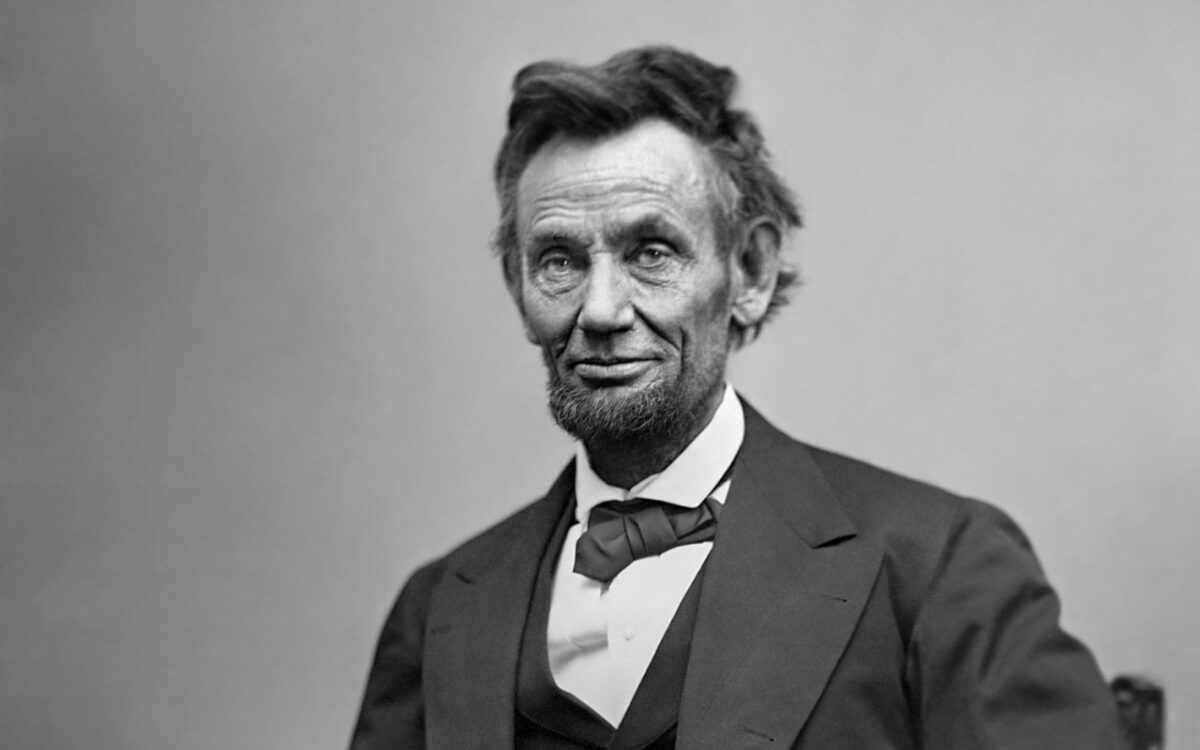
There was one president who endured political unpopularity more severe than anything Donald J. Trump faces today. That president was Abraham Lincoln—the man many historians regard as America’s greatest president.

Modern scientific polling did not exist during the Civil War. Historians therefore must rely on newspapers, soldiers’ letters, election results, party activity, political correspondence, and other evidence to approximate public opinion. The strongest defensible conclusion is that Lincoln’s standing was dangerously weak during the first half of 1863. Some historical estimates suggest that support for his administration may have fallen into the rough vicinity of 25 percent.
That estimate cannot be treated as the equivalent of a modern Gallup or Rasmussen poll. Still, the historical record leaves little doubt about the depth of Lincoln’s difficulties. The Union had suffered two years of grim casualty lists, military failures, mounting debt, bitter controversy over the Emancipation Proclamation, and fierce resistance to the first federal military draft. Families throughout the North saw sons, fathers, and brothers leave for war—and too often return wounded, disabled, or not at all.
Lincoln’s popularity could rise or fall with battlefield news. A military victory might briefly revive Northern confidence. A defeat could produce despair, criticism, and political revolt. The president carried not only the burden of conducting the war, but also the weight of trying to preserve the Union while transforming the nation’s relationship to slavery.
His political opposition was fierce. Northern Democrats, especially the antiwar faction known as the Copperheads, denounced the administration’s conduct of the war and attacked its restrictions on civil liberties. They accused Lincoln of tyranny, condemned the draft, criticized emancipation, and argued that the war should end through negotiation with the Confederacy.
The Copperheads did not represent all Northern Democrats; any more than the most radical elements of today’s political parties represent every voter. But their influence was real. They found support among citizens weary of war, immigrants worried about the draft, business interests harmed by disruption, and Democrats who opposed emancipation or racial equality. Lincoln also faced criticism from within his own Republican coalition. Radical Republicans believed he moved too slowly against slavery and was too cautious in pursuing total victory.
This was the political reality of 1863: Lincoln was criticized from the left, attacked from the right, burdened by a prolonged war, and held responsible for every military disappointment. He did not have the benefit of daily polling averages, cable-news panels, social-media campaigns, or professional consultants measuring public sentiment by the hour. Yet he knew the country was deeply divided, and he understood that public morale could determine whether the Union endured.
Then came Gettysburg and Vicksburg.
On July 3, 1863, the Army of the Potomac defeated Robert E. Lee’s Confederate Army of Northern Virginia at Gettysburg, Pennsylvania. The battle ended Lee’s second invasion of the North and became one of the bloodiest engagements in American history. Total casualties are generally estimated at roughly 51,000 men, including approximately 28,000 Confederate casualties.
Gettysburg was more than a battlefield victory. It halted a Confederate invasion at a moment when many Americans feared the war might be lost. Lee’s retreat back across the Potomac did not end the conflict, but it deprived the Confederacy of an opportunity to win foreign recognition, weaken Northern morale, and force a negotiated peace.
The following day, July 4, Gen. Ulysses S. Grant’s Union army captured Vicksburg, Mississippi. That victory was both military and economic. Vicksburg had been the last major Confederate stronghold on the Mississippi River. Its surrender gave the Union effective control of the river, split the Confederacy geographically, and severely disrupted the movement of men, food, weapons, and commerce across the South’s western flank.
Gettysburg stopped an invasion. Vicksburg divided the Confederacy and strengthened the Union’s economic and strategic position. Together, the two victories transformed national morale. They did not end the war—far from it—but they reminded a discouraged Northern public that persistence, discipline, and sound strategy could still produce results.
That is a lesson worth remembering in the present political climate.
Today, Republicans face a different kind of test. America is not fighting a civil war, nor are Americans facing compulsory military conscription as citizens did during Lincoln’s presidency. Yet the nation confronts serious military, economic, and geopolitical challenges. Instability in the Middle East, the cost of energy, inflation, trade imbalances, supply-chain vulnerability, and public anxiety about economic security all bear heavily on voters’ judgments.
The outcome of November’s midterm elections will not be determined by polling alone. It will be shaped by whether voters believe their families are more secure, whether wages and purchasing power are improving, whether the country is strong abroad, and whether the political leadership has offered practical answers to daily concerns.
There are also reasons for hope. Job creation, rising incomes, lower poverty, renewed domestic investment, and efforts to restore supply-chain security can matter more than the tone of media coverage or the predictions of professional pollsters. Economic conditions do not erase every concern, but voters often make their final decisions based on what they see in their own households, workplaces, businesses, and communities.
Polls can measure a moment. They cannot measure every event that has not yet occurred, every voter who has not yet made up his mind, or every change in public opinion prompted by events at home and abroad.
Republicans may lose the media war. They may lose the daily battle of headlines, punditry, and polling narratives. But they need not lose the larger argument about national security, economic opportunity, energy independence, trade, and the future direction of the country.
Lincoln’s example should not be used carelessly. No modern political struggle compares in human cost or constitutional consequence to the Civil War. But his experience does offer one enduring truth: public opinion is not fixed, political fortunes can change rapidly, and perseverance matters.
Republicans do not necessarily need a modern Gettysburg. They do not need a national crisis. They need credible victories—economic, strategic, and practical—that demonstrate competent leadership and give ordinary Americans confidence in the future.
A modern Vicksburg may be enough: a clear economic success, a reduction in household pressure, a meaningful improvement in energy security, or a tangible victory in rebuilding American production and supply chains.
The polls will come and go. The headlines will change. November has not yet been decided.