During and after the Covid-19 pandemic, I walked the grounds of The Plantation Golf Course with my granddaughter Lilly. The 100-year-old trees and the rolling, old‑school golf course—with its turtleback greens and white sand traps—set the scene for some of the best conversations of my life. For a grandfather who helped raise five boys, there is a special kind of wonder in getting inside the heart of a granddaughter and seeing the world through her imaginative eyes. As she grew into her teenage years, those walks became more thoughtful. Lilly doesn’t have a political bone in her body, but she inherited her grandmother’s skepticism and common sense.
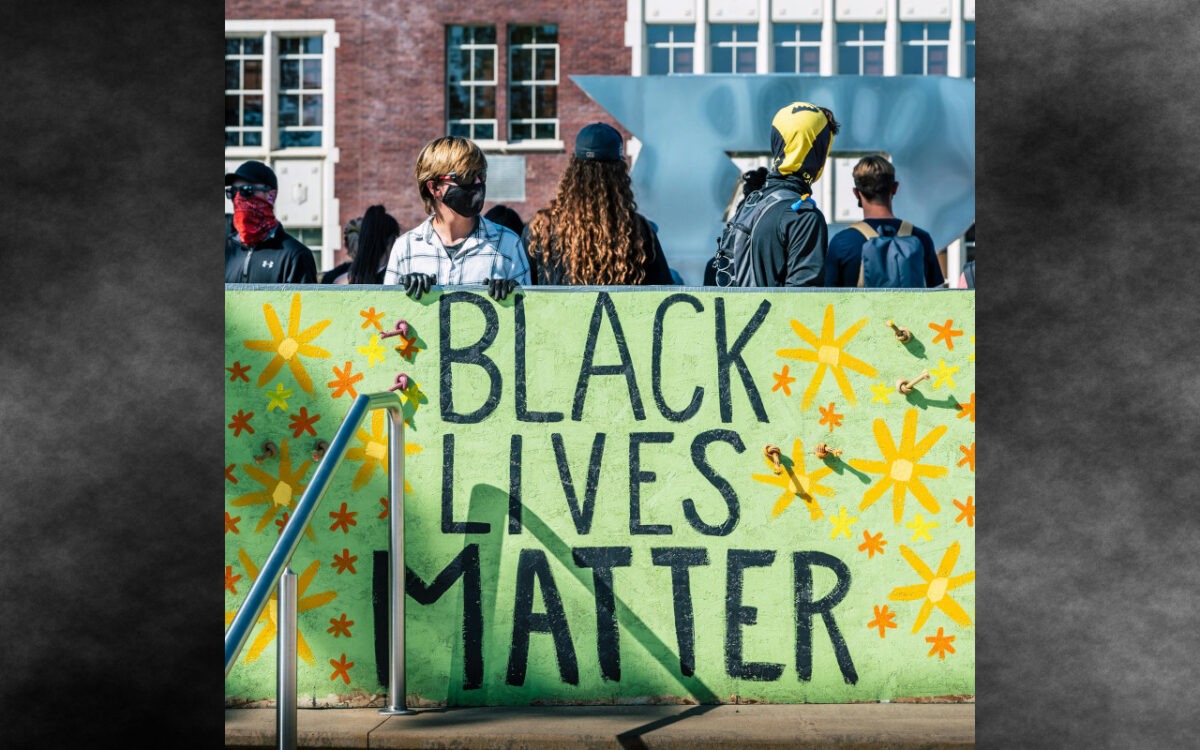
One afternoon during the season of racial unrest—one that some on the left seem almost eager to reenact with another “summer of love”—Lilly noticed a Black Lives Matter sign at the end of a long cul‑de‑sac. The neighbor who put up the sign surely meant well. But Lilly’s question was simple: what good does a sign do when it’s half‑hidden in the trees and bushes, at the dead end of a quiet street where almost no one will see it? She was unaware of the endless stream of images and slogans that filled social media that year. People like me had to walk right up to that sign, in a sleepy neighborhood, just to read it.

The honest answer is that the sign did nothing to stop racial injustice or police brutality. A “Back the Blue” sign in the same spot would have done just as little. Yard signs do not change policy, reform institutions, or heal broken communities. What they do—very effectively—is console the person who plants them. The sign‑owner can tell himself, “I’m doing something.” That is the essence of virtue signaling. It is the moral equivalent of Nancy Pelosi telling Wolf Blitzer, “We feed them,” as if the mere assertion of empathy were proof of it. The performance becomes the point.
At the very beginning of the Sermon on the Mount, in the Gospel of Matthew, Jesus warns, “Be careful not to practice your righteousness in front of others to be seen by them.” St. Thomas Aquinas later reminds us that if the point of an act is attention, then the act is hollow; virtue requires the right intention. When the chief aim is to be seen as good, the goodness itself evaporates.
To be fair, I do not know that neighbor’s heart. For all I know, that family may be quietly underwriting a church ministry, a camp for the disabled, or the Boise Rescue Mission. The sign might be the least of their efforts. But advertising one’s empathy is not the same thing as compassion. Compassion requires action—time, money, presence, sacrifice—not just a declaration stapled to a stake.
St. Augustine warns about caritas incurvata in se—love curved inward on itself. Charity becomes self‑love when the giver’s primary reward is the admiration of others. That, I suspect, is the real telos of much modern virtue signaling, not to help the vulnerable, but to polish the self. The yard becomes a stage, and the sign a prop.
I include myself in this critique. I have been guilty of the same impulses, and that is part of why they are so easy to recognize. The hunger to be seen as righteous is bipartisan; it is not an issue of right or left. Yard signs fall squarely under the protection of free speech, and in a free republic people are entitled to plant as many as they wish. But we should be honest: words are not actions. A slogan is not a meal, a place to sleep, or a hand held in a hospital room.
If we are going to use our lawns for messaging, I would rather see signs that point toward real, concrete work: the Boise Rescue Mission, Camp Rainbow, St. Vincent de Paul. Not simply, “I support X,” but “Come volunteer; come serve; come join.”
Encouragement toward participation is a different kind of speech than self‑advertisement. True charity and love of neighbor form a covenant relationship between giver and receiver, and God is a party to that covenant. In that context, silence is not “violence.” Sometimes it is the sound of listening. Two neighbors talking over a hedge—talk, listen, reverse and repeat—may accomplish more than a forest of placards.
I learned something about this when I was in my third year of medical school, visiting my Quaker grandparents in Swarthmore, Pennsylvania. My grandfather had just retired as Chairman of the Board of Jeanes Hospital—what is now part of a major oncologic institution. In the boardroom hung portraits of all the former chairmen, looking down at the conference table. The frame bearing my grandfather’s name, however, held not his face but a wildlife scene. My grandmother was quietly proud of that choice. A portrait, she said, would have been calling attention to himself. For them, the work was the point; the recognition was dispensable. Acts of charity and community service were meant to be, as far as possible, private.
In true charity, in true caring and compassion, there is no need for public virtue, only private integrity. The more we seek applause for our goodness, the more fragile and performative it becomes. There is no real compassion in virtue signaling, only the rehearsal of compassion.
As I walked that golf course with Lilly and watched her grow, I prayed that she would learn this: that the measure of love is not the sign in the yard, but the life behind the door.