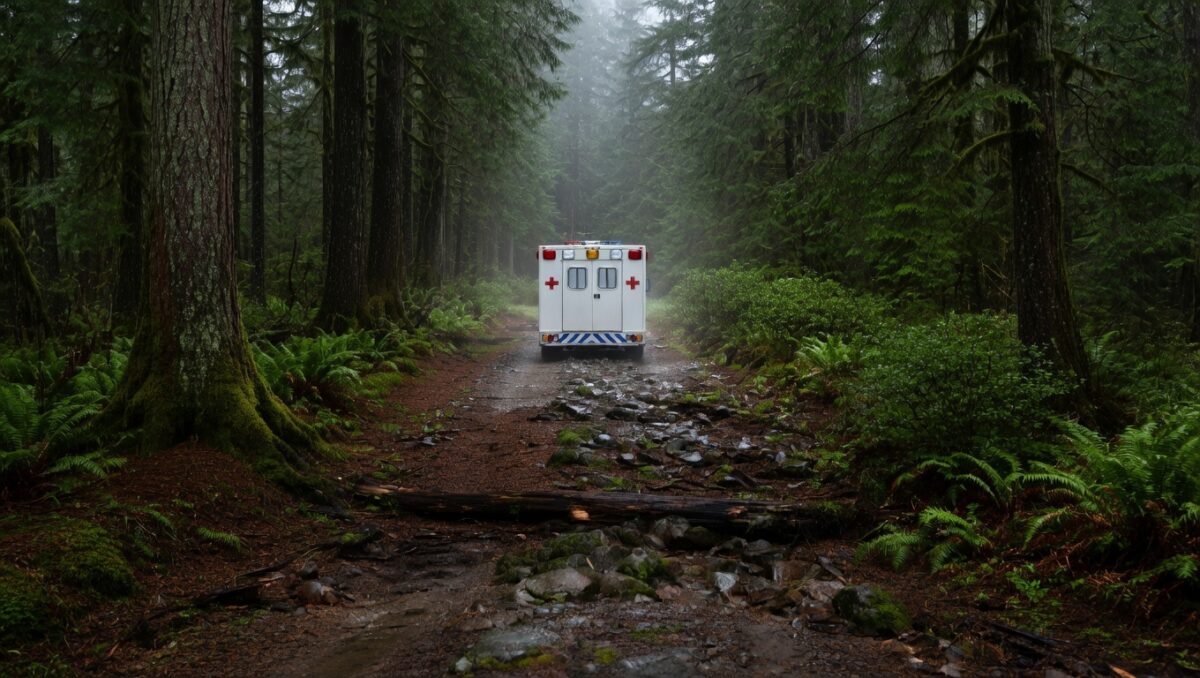
In rural Idaho, when someone calls 911 during a medical emergency, the most important question should not be whether help can reach them and in many rural communities today, that question is becoming very real.
Across Idaho, counties are struggling to maintain reliable Emergency Medical Services (EMS). Volunteer responders are stretched thin. Equipment is expensive. Response areas are large. In some places the roads themselves have deteriorated to the point that emergency vehicles face serious challenges reaching homes.

At the same time, Idaho’s state government continues to grow. The state budget now totals roughly 14 to 16 billion dollars depending on the fiscal year. Idaho is growing rapidly. New residents are arriving tourism is booming and businesses are expanding. Unfortunately, the services responsible for protecting people when something goes wrong are largely operated by county government and in many rural counties, those systems are under increasing strain.
Counties Deliver the Services That Protect People: When something goes wrong in rural Idaho, the response almost always comes from county government.
Sheriff deputies respond to calls for service.
County road crews maintain rural transportation networks.
Search and rescue teams deploy into Idaho’s mountains and rivers.
Emergency medical responders answer 911 calls.
These are the services closest to the people yet counties operate with the most limited revenue tools in Idaho’s government structure. Most county budgets rely heavily on property taxes, which in Idaho are generally limited to about three percent annual growth plus new construction Meanwhile the fastest growing revenue streams in Idaho are sales taxes and income taxes, which flow primarily to the state.
The Breaking Point is Emergency Medical Services: The clearest example of the imbalance is emergency medical service. Across rural Idaho many counties struggle to maintain reliable EMS coverage. Ambulance systems often rely heavily on volunteers funding, which is limited and staffing is difficult.
In some areas response times continue to grow as population increases and recreation expands. The costs of modern EMS equipment alone are significant and a new ambulance can cost 250 thousand to 400 thousand dollars; advanced cardiac monitors can cost 30 thousand to 50 thousand dollars. Training, staffing, fuel, and medical equipment add to the cost every year, yet many rural communities struggle to fund even the basic operation of these systems. If a government cannot reliably provide the ability to get a resident safely to the hospital, the system is clearly under strain.
A Real Example From Boise County: This issue is not theoretical. At a recent Boise County commissioner meeting, residents from the Clear Creek Road area appeared before the county to express serious concerns about the condition of the road serving their community. Residents described potholes deep enough that sections of the road are difficult to pass safely. In some places the deterioration has become severe enough that emergency vehicles face serious challenges using the road. Several residents raised the concern that fire and EMS vehicles cannot reliably travel the road in their current condition. When the ability of an ambulance or fire truck to reach a home becomes uncertain, the issue moves beyond inconvenience. It becomes a public safety concern.
The Boise County Road and Bridge Department maintains hundreds of miles of rural road with a limited budget. The problems facing Clear Creek Road did not appear overnight. They are the result of years of growing demand placed on a system with limited funding. Residents were not asking for luxury infrastructure. they were asking for something much simpler. They were asking for a road safe enough for an ambulance to reach their homes.
Rural Roads Carry Growing Traffic: Boise County alone maintains roughly 380 miles of county roads. These roads serve residents, recreation users, seasonal property owners, and visitors traveling to Idaho’s public lands. Traffic will continue to increase as Idaho grows but the revenue available to maintain those roads grows slowly under existing tax limits. Emergency response depends on safe roads. When road systems fall behind, it affects everything from daily travel to the ability of ambulances and fire services to reach people quickly.
Growth Creates Demand for Local Service: Idaho’s population growth and recreation economy continue to increase demand for local services. Tourism alone generates billions of dollars in annual visitor spending across the state as visitors come to Idaho’s rivers, forests, mountains, and recreation areas. But when accidents happen on rural roads or injuries occur in recreation areas, the response comes from local government.
Sheriff deputies respond.
Search and rescue volunteers deploy.
Ambulance crews are dispatched.
Counties absorb the responsibility for those services regardless of whether the person involved is a local resident or a visitor.
Local Government Is Becoming Harder to Sustain: Across Idaho many county positions run unopposed. When residents are asked why more people do not step forward, the answer is often simple. Many working residents cannot afford to take the role. County offices require significant time commitments beyond attending meetings and some describe these roles as part time but the reality of modern county government often requires far more involvement than a typical part time job. At the same time Idaho’s cost of living has increased dramatically.