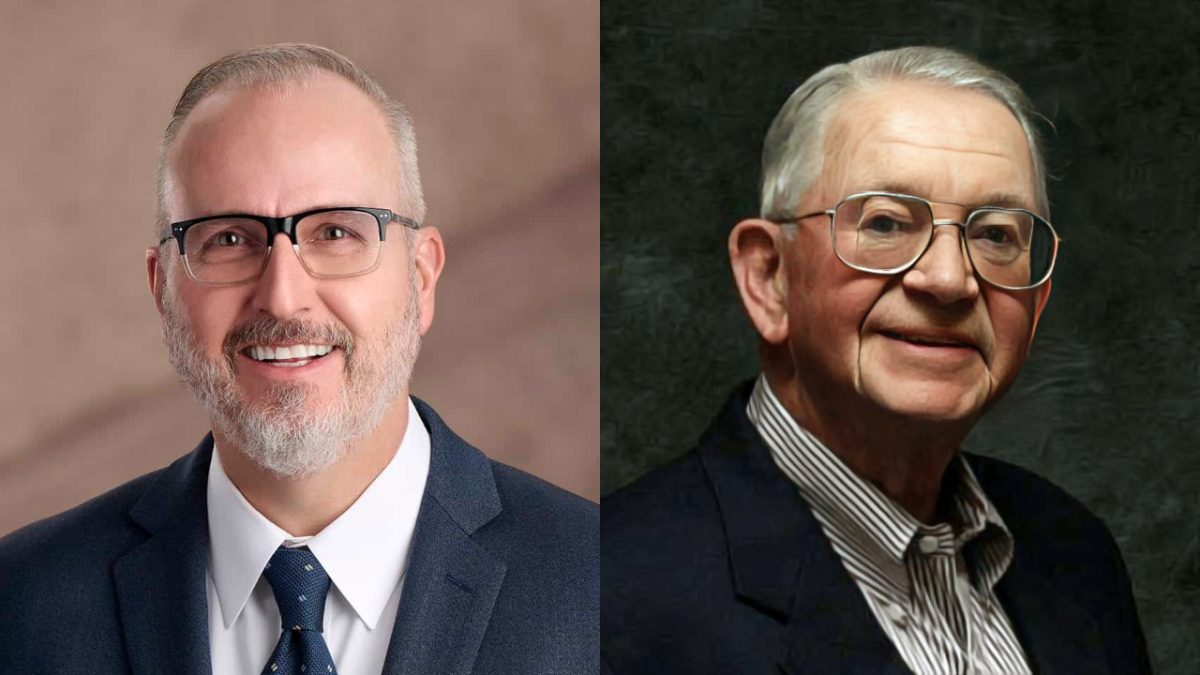

Bob Neugebauer welcomes Ron Nate, president of the Idaho Freedom Foundation, to discuss teacher pay, surveillance technology, Republican Party integrity, and the upcoming 2026 primary elections. With Election Day one week away, the conversation turns to several issues that return to a central question: whether Idaho voters will hold candidates accountable to conservative principles or continue rewarding well-funded establishment incumbents.
The episode opens with a dissection of the governor’s Teacher Appreciation Week press release, which touted “sustained investment” in teacher pay. Nate presents the gap between that framing and the numbers: K-12 education spending has risen 70% since 2019, but teacher pay has increased only 21%, with the difference absorbed largely by administration. The performance evaluation system compounds the problem—nearly 100% of teachers receive top ratings of proficient or distinguished every year, meaning compensation tracks seniority and credentials rather than teaching outcomes. Neugebauer argues that competition through school choice, citing classical schools that rank in the top 10 for student achievement, offers a better model than blanket pay increases.

The conversation shifts to flock cameras—AI-enabled automatic license plate readers deployed across more than 5,000 communities nationally, concentrated in the Treasure Valley, particularly in Caldwell. The cameras capture license plates, vehicle characteristics such as make, model, dents, and bumper stickers, and operate 24/7, with data typically held for 30 days. Nate raises the privacy implications of movements being recorded and potentially sold or shared with law enforcement, and both hosts weigh the security-versus-liberty tradeoff as AI surveillance technology expands.
The final segment frames the 2026 primary as a test of whether Idaho’s slow growth in liberty-minded legislators—from 2 when Nate served to roughly 12-15 today—will continue or stall. Nate and Neugebauer debate whether grassroots engagement can overcome the financial advantage held by corporate-establishment candidates, with Neugebauer arguing that uninformed voters and well-funded special interests consistently tip results toward big-spending incumbents, while Nate contends that in what amounts to a three-party state, 35% support could be enough to shift the balance.
0:01 Introduction and Episode Preview
Bob Neugebauer introduces the show and welcomes Ron Nate to discuss teachers’ pay, flock cameras, and primary elections. Nate notes that while the legislative session has ended, primary election season keeps Idaho politics active.
0:52 The Governor’s Teacher Appreciation Claim and the 70% vs. 21% Gap
Nate reads the governor’s Teacher Appreciation Week press release touting “sustained investment” in teacher pay, then presents the numbers behind the rhetoric: K-12 education spending has increased 70% since 2019, but teacher pay has risen only 21%, with much of the difference going to administration. He notes the governor also credited a $1,000 teacher bonus without mentioning it came from federal COVID funds. Both hosts challenge the premise that higher pay alone improves education outcomes, with Nate pointing out that a business measuring success mainly by payroll is likely to fail.
4:34 Broken Incentives: Teacher Evaluations and the 99% Proficient Problem
Nate reveals that nearly 100% of Idaho teachers receive top performance ratings—proficient or distinguished—every year, making the evaluation system functionally meaningless for distinguishing excellence. He explains the incentive structure: administrators give universally high ratings because teacher pay is tied to those ratings, and administrators want to be viewed favorably by their employees rather than their customers—the parents and students. The result is a system where compensation tracks time served and educational attainment rather than teaching performance. Neugebauer draws a contrast with the brokerage industry, where his compensation was determined directly by client results, and argues that school choice and competition offer a better path than across-the-board pay increases, pointing to classical schools that rank in the top 10 for student achievement.
8:55 A Tale of Two Parties: Republican Platform Adherence vs. Democratic Unity
Nate previews an upcoming article arguing that Democrats adhere to their party platform far more consistently than Republicans do. While both parties have stated principles, a D next to a name reliably predicts how that candidate will govern, whereas an R raises the question of what kind of Republican they are. Neugebauer sharpens the point by describing two distinct Republican factions: a corporate-establishment wing that supports cheap labor through immigration, shifts education and healthcare costs to taxpayers through Medicaid expansion and workforce training, and a constitutional-conservative wing focused on limiting government. Nate agrees and suggests it might be more honest to acknowledge the GOP as two separate parties with different platforms, noting that each faction may actually adhere to its own principles—they just aren’t the same principles.
17:25 Campaign Funding and the Grassroots vs. Establishment Money Gap
Neugebauer notes that conservative legislators like Glenita consistently struggle to fund campaigns against well-financed establishment challengers. Nate confirms the pattern from his own experience of being outspent 3, 4, or 5 to 1, but describes how grassroots supporters compensated through door-to-door canvassing and neighbor-to-neighbor conversations. Both hosts agree that door-to-door campaigning remains the most effective strategy for underfunded candidates, with Nate adding that the process made him a better legislator because it kept him in direct contact with constituents’ priorities.
20:22 Flock Cameras: AI Surveillance in the Treasure Valley
Nate introduces flock cameras—AI-enabled automatic license plate readers deployed across over 5,000 communities nationwide, with a notable concentration in Caldwell. The cameras are solar-powered, run on LTE, and capture not just license plates but vehicle “fingerprints” including make, model, color, bumper stickers, dents, and roof racks. Data is typically held for 30 days, but critics including the ACLU argue the cameras create a mass surveillance dragnet tracking innocent individuals. Neugebauer connects this to broader surveillance capabilities he encountered during his years holding a top-secret security clearance, and both debate whether the security benefits justify the privacy cost—a tradeoff Nate frames through the lens of trading liberty for security and likely ending up with less of both.
26:40 The 2026 Primary Election Stakes and the Path to 20 Liberty Legislators
With primary elections one week away, Nate frames the stakes: Idaho has grown from 2 liberty legislators when he served to roughly 12-15 today, but reaching the low 20s in the House would create enough leverage to influence leadership elections and legislative outcomes. Neugebauer is skeptical, arguing that money consistently determines results and most Idaho voters remain uninformed, accepting misleading campaign literature from well-funded candidates who claim conservative credentials while carrying F-range freedom scores. Nate counters that in what functionally amounts to a three-party state, winning 35% in a primary may be enough to tip the balance, and urges voters to engage their neighbors rather than fall into despair about the system.
39:06 The Governor’s Race, Colorado, and Closing
Neugebauer expresses dissatisfaction with the gubernatorial candidates, suggesting none would govern in a constitutional-conservative manner, and traces the pattern through Governors Otter and Little. Nate agrees that voters should abstain from races where no candidate meets their principles rather than checking a box by default. Neugebauer closes with a note about a Republican candidate for Denver mayor with a strong chance of winning, calling it a potential turning point for Colorado’s political trajectory based on his years living there.