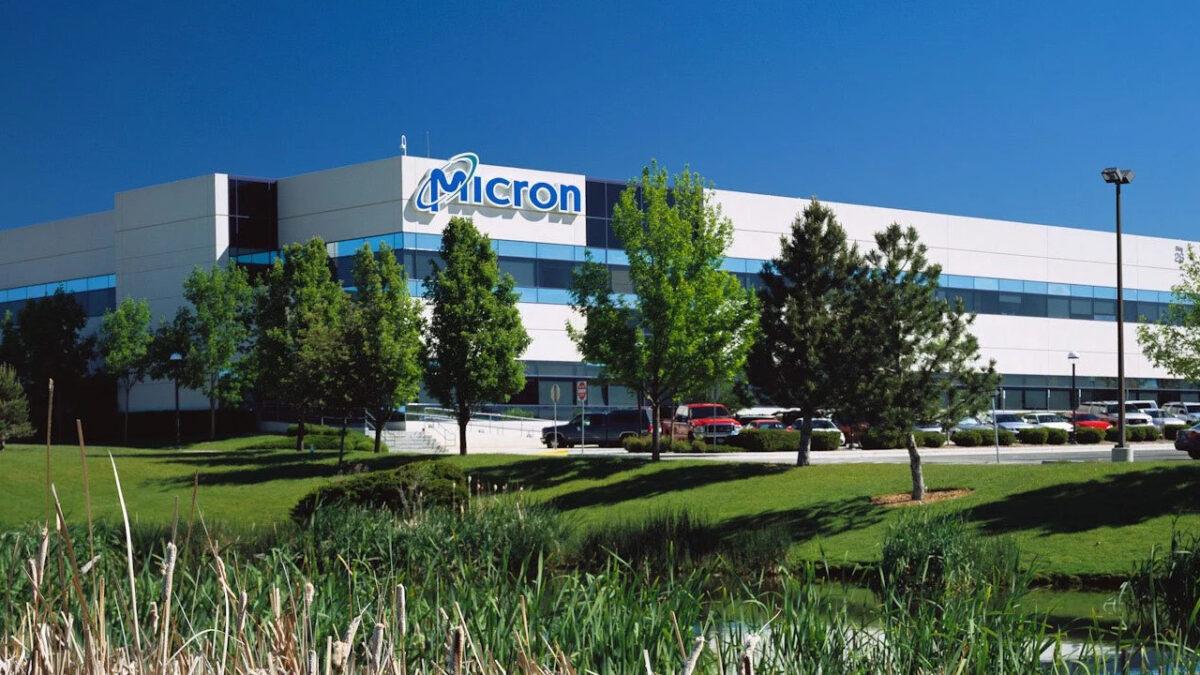
I want to personally thank Senator Brian Lenney for making known the problems that Idahoans will face if indeed this Micron FAB is permitted to be built under the auspices of 18-year-old legislation never used for the purpose it was written. This will leave Idaho’s citizens to once again pick up the tab for Idaho corporations as they will escape the real intrinsic costs of building this new Micron Plant.
Idahoans realize that growth has a price since we have seen what has happened in the Treasure Valley as our legislators love growth and the donations they get from developers and corporate lobbyists for their reelection. They always seem to craft legislation the helps the corporate world but shifts the tax burden of new development to the average Idaho taxpayer. Just look at the tax deals being cut by our politicians to the benefit of the new data centers and now the 50 billion Micron facility recently announced. While we are all excited to see a home-grown company deciding to build this plant in the Gem State there is a catch. So, let me tell you what that catch is? I’ll give you a hint; it is all about tax breaks for corporations. Idahoans don’t realize that a good part of the reason for Micron’s home coming is a deal for money not love. A deal that has its roots in a bill passed by our legislature back in 2008. to lure Areva, a French nuclear company, into building an enrichment plant near Idaho Falls which never happened.

Here is the nitty gritty of House Bill 562 from (2008): it isn’t a general property-tax cap it’s nothing more than big-industry investment incentive, formally titled the “Idaho New Capital Investments Incentive Act of 2008.” The “$400 million” figure where the tax maxes out is at the heart of it, and here’s exactly what it does.
For a qualifying “new capital investment,” the law exempts from property taxation all net taxable value in excess of $400 million located within a single county. In practical terms, it caps the taxable value of such a project at $400 million: the company pays property tax on the first $400 million of value, and everything above that no matter how large the facility is exempt from property tax. So, a $3 billion or $5 billion plant is still only taxed as if it were worth $400 million in that county.
To qualify for that cap, a project has to clear a relatively high bar:
- A minimum investment of $1 billion during the project period,
- Spent on new plant and building facilities (real or personal property construction, equipment, installation),
- Located within a single county, and
- Completed within a project period of up to 7 years (earliest start January 1, 2008).
The bill carried a fiscal note stating no impact to the state, because Idaho property taxes fund local governments and schools, not the state general fund so the foregone revenue falls at the local level.
The real-world context is that this was written for, and has principally benefited, very large manufacturers most notably Micron Technology, whose massive Boise-area semiconductor operations and subsequent multi-billion-dollar expansions are the kind of investment the $400 million cap was designed to attract and retain. (Recent reporting on Micron’s expansion has centered on exactly this exemption growing as the company invests further.) It does not touch ambulance districts, school levies, or ordinary residential/commercial property it’s specifically a large-scale industrial incentive.
This ties directly back to the HB 562 question, and the honest answer is that Micron self-funds some of the infrastructure but a lot of the growth burden and the risk falls on the public and existing ratepayers, while the $400 million tax cap limits what the plant pays back locally.
The jobs number, clarified. The approximate number of jobs created by this new facility is around 17,000 which includes the labor necessary to prepare the ground and erect the new facility. Micron’s direct new hiring at the Boise fabs is on the order of a few thousand added to its existing ~7,000-person Boise workforce, eventually reaching roughly 10,000. This will still drive large secondary demand as every fab job supports several others so the total footprint is real.
Housing dislocation: This is by far the sharpest pressure point, and it lands on current residents. Idaho grew 10.4% from 2020–2025 the fastest in the nation and the Boise/Meridian market was already tight and expensive before this. Adding thousands of well-paid Micron workers to a fixed short-run housing supply is exactly the demand shock that pushes prices and rents up (the same mechanism the Dallas Fed has documented on immigration). It should already be noted that homes are currently selling above list price at above-national rates. The squeeze will fall hardest on existing lower- and middle-income residents who don’t get the sizable Micron paychecks. Micron’s housing commitments have so far been thin at about $1 million to Boise’s Supportive Housing Fund: It should be noted that Micron had committed to a $250 million housing-and-workforce fund for its Syracuse, New York project. So, on housing, the mitigation from Micron has been modest, and most of the adjustment is being absorbed by the local market and residents.
Roads and transit: This is largely a public cost. Micron says it’s “working with” the Ada County Highway District, the Idaho Transportation Department, and the City of Boise, but has committed no specific dollar figure for new roads or transit. Road capacity is normally funded by those public agencies through impact fees, gas taxes, and levies meaning taxpayers will most likely carry most of the burden, with developers paying impact fees at the margins as usual.
Water: This is the area where Micron is carrying its own weight. The company committed to fund a third water-renewal (reclamation) plant in Southeast Boise, accelerating it by about five years, and is targeting essentially 100% on-site water recycling to limit aquifer draw. Boise’s 2021 water bond is explicitly not subsidizing Micron. So, the fab’s water infrastructure is substantially Micron-funded and is a genuine point in its favor.
Power: This is the biggest “who pays” risk to ordinary residents. Semiconductor fabs are enormous electricity consumers, and Micron’s own CEO flagged “the need for enhanced energy infrastructure” as a constraint. Idaho Power must add generation and transmission to serve it. This has fed directly into contested rate cases at the Idaho Public Utilities Commission, where the core fight is whether huge new industrial loads (Micron plus the new data centers) pay for their own grid upgrades through special large-load contracts, or whether those costs get socialized onto residential ratepayers. Idaho Power has proposed large-load tariffs meant to protect regular customers, but ratepayers are strongly opposed the rate increases, and whether the safeguards hold is as of yet unsettled. If large-load costs get spread across everyone, ordinary households will help pay for the fab’s power in their monthly bills.
So, who pays for all of it? Here is how it breaks down:
- Federal taxpayers: ~$6.1 billion in CHIPS Act subsidies to Micron (Boise and New York plants combined; roughly $1.5 billion attributed to Boise).
- State/local taxpayers (foregone revenue): Idaho tax incentives a ~30% Tax Reimbursement Incentive for up to 15 years (about $45.7 million is cited), a sales-tax exemption on construction materials, expedited permitting, and the City “right-sizing” permit fees (waiving roughly $150 million versus the standard formula). And critically, the HB 562 $400 million property-tax cap: this ~$50 billion facility is taxed as if it were worth $400 million, so it contributes far less local property tax than its size implies even as it drives up demand for schools, roads, and services that property tax funds.
- Micron: on its own campus will be the water-renewal plant and modest housing/childcare contributions.
- Existing residents and ratepayers will have to deal with: the housing-price squeeze, most road/transit/school growth costs, and potentially a share of the power-grid buildout through utility rates which are not yet clarified.
Here is the bottom line: the water piece is genuinely Micron-funded, the jobs and investment are a real economic win, and federal money covers a chunk. But the structure means much of the growth burden for housing, roads, schools, and possibly power is going to be carried by existing taxpayers and ratepayers, while the plant’s own property the tax contribution is capped at $400 million. The problem lies in the facts that: Idaho used the tax cap to win the investment, and the trade-off is that the enormous facility pays back proportionally little to the local tax base that has to absorb its growth. Whether the jobs and economic ripple outweigh this commitment is the real debate and it’s a legitimate one on both sides.
One last but very important question for Idahoans: should be the fact that now where will you find a requirement for employment of Idahoans in any of these bills but thanks to our very astute Senator Brian Lenny we know that Micron has already filed 573 H-1B visa applications last year for foreign workers. While Idahoans will more than likely get the lower-level jobs Idahoans should be interested to find out if the senior jobs will be filled by H1B employees who will be tethered to Micron and will have little or no bargaining power and can’t quit without losing H-1B status.
Senator Lenny outlined what he will do to stop this inequity in his Substack and should be commended for his intended actions which you can read below.
“I’m bringing a bill to repeal all of it. Not sunset it. Not index it. Repeal. Title 63, Chapter 45, the $400 million cap. Written for a company that never came, passed 41 to 27, no member’s name on the bill, and they declared an emergency to backdate it. Brad Little even voted no on it when he was a legislator.”
“Idaho Code 63-3622VV. The data centers. Will provide Thirty full time jobs.”
“Idaho Code 63-3622WW. Read subsection 4(e): to qualify you have to already be collecting CHIPS money and already be claiming the 2008 cap. We wrote the old giveaway into the new one as a prerequisite. It’s a corporate welfare ladder, and we built every rung ourselves.”
“Three sections need to go. Because a tax break for one company is a tax increase on everybody else. And a business that has to be paid to come here is coming for the check, not for Idaho. It’ll leave for a bigger one.”
“America First isn’t a line for a mailer…It means the American worker comes before the shareholder, the kid from Nampa gets first look at the job in his own state, and a trillion-dollar corporation that wants our power and water and roads pays the same freight as the framer down the road and hires our kids while it’s here.”
“We Get the Government We Deserve”




One reply on “At What Price Growth and Who Should Pay for it?”
I hope Senator Lenny is successful.