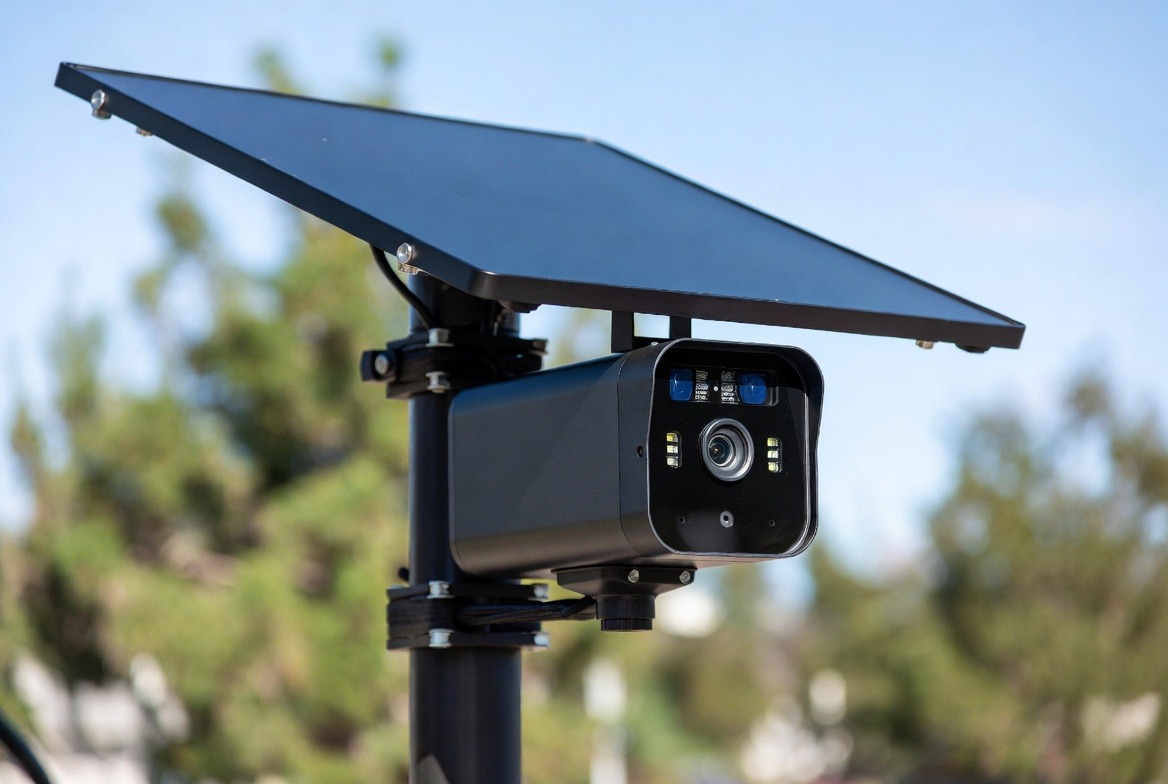
The honest answer is that it’s an unsettled legal question right now, as the courts have not definitively decided it, and litigation is actively working its way through the system as of 2026.
Here’s the underlying legal framework. Flock cameras are nothing more than automated license plate readers (ALPRs). Traditionally, most courts have held there is no “reasonable expectation of privacy” in a single license plate as it is displayed publicly on a car driving on public roads, so one cop reading one plate is clearly not a search. However, the Fourth Amendment issue arises from the aggregation of cameras: When we think of it in those terms of a network of Flock cameras across thousands of locations that store data, it could give you a system that could reconstruct where a specific car and, by extension, a specific person has been over weeks or months. This argument against them leans on the Supreme Court’s 2018 Carpenter v. United States decision, which held that collecting long-term cell-phone location data is a search requiring a warrant, precisely because continuously tracking someone’s movements reveals a detailed portrait of their private life even though each individual data point is “public.”

The two sides break down cleanly. Critics like the ACLU and the Institute for Justice, among others, will argue that a city-wide camera dragnet capturing everyone’s daily movements is exactly the kind of pervasive, warrantless tracking SCOTUS warned about in the Carpenter v U.S. decision. Flock and many law-enforcement agencies counter that license plates are public, the cameras only capture vehicles in public view, and data is typically retained only for a limited window (often ~30 days). So, if you believe them, it’s not the years-long dragnet Carpenter involved.
On the actual rulings so far, the results are mixed and provisional. In January 2026, a federal judge in Norfolk, Virginia (Schmidt/Arrington v. Norfolk) ruled that while the city’s Flock system did not violate the Fourth Amendment, the court notably warned that ALPR surveillance “could become too intrusive and run afoul of” constitutional standards as the technology expands. A Virginia state appeals court has also upheld the cameras. Meanwhile, that Norfolk case is on appeal to the Fourth Circuit (where the ACLU filed a brief in April 2026), a California class action was filed in early 2026 under state privacy law, and a recent Supreme Court location-data ruling (reported as Chatrie) is being read as potentially strengthening the challengers’ hand.
So if you are looking for a direct answer to the question “are Flock Cameras an invasion of privacy” the simple answer is as of now, no court has held Flock cameras categorically unconstitutional, and the prevailing rulings have upheld them but judges themselves are signaling the answer may change as the networks grow denser and retain data longer, and the appellate courts (possibly eventually the Supreme Court) haven’t had the final word. It’s genuinely one of the live, unresolved Fourth Amendment questions of the moment. It is worth noting that even where the federal Constitution doesn’t clearly bar them, individual states can and increasingly do regulate or restrict ALPRs through their own laws. Idahoans might be surprised to know just how many cities are using Flock Cameras or other types of license plate readers, so we took a look, and here are the results.
Based on current reporting (Mid – 2026), here are the Idaho cities and jurisdictions confirmed using Flock Safety and other Flock-type cameras.
Idaho Falls – About 13 cameras for the city police, plus roughly 9 for the Bonneville County Sheriff’s Office.
Caldwell – 40+ cameras in high-traffic areas.
Twin Falls – Around 40 readers
Pocatello – roughly 34 cameras on light poles
Coeur d’Alene – has reportedly used the cameras for years. (no count)
Wilder and Greenleaf, which are small Canyon County towns, were recently installed and notably without public council votes.
Jerome County (Sheriff’s Office) Flock cameras in use there made news over misuse. It was reported that the Jerome County Sheriff at that time used Flock cameras to search for his wife’s vehicle hundreds of times between July and September 2025. However, the Idaho AG’s office said in a February letter that it did not find sufficient evidence to prove a crime beyond a reasonable doubt. This is a perfect example of how these cameras can be misused.
The two other cities we found that use these types of cameras but are not Flock Cameras are:
Boise – which runs a different license plate reader platform, and Meridian, which also used a different format than Flock. It is installing AXON Outpost readers and expanding from 18 to a planned 66 cameras
As you can see, there are few cities that are currently using this system, but why is it that so many of them installed them without first informing the public about their installation and the cost involved? Any surveillance should be concerning to Idaho’s citizens. Especially when many of these systems are being installed by our elected government officials without informing the public or telling us how much they cost.
Smile, you are on Candid Camera?? “We get the Government we Deserve.”


7 replies on “Are Flock Cameras Invading our Privacy?”
Flock has a bad name but even worse are the Axon cameras with the Carbyne back end, which no one is talking about. Constant bait and switch and Hegelian dialectics to keep people spinning in circles. These systems are all an expansion of the AI Surveillance system being rolled out even further than it was before. Since 9/11 we have seen a massive expansion of the police state. Your cell phone probably has more tracking than you want to admit. From cell phones to computers and SMART everything we already have full surveillance. What exactly is the issue with Flock all of a sudden? Anyway, when you add drones and robotics into the mix we are basically living in an open air prison. What we call freedom is a literal joke at this point.
This seems like a fluff piece written to calm folks down and let the courts decide.
The people will decide whether or not they want to be survielled.
Not the courts or corporations and especially not the cops.
This is WAR.
I don’t write fluff pieces William I leave that to the liberal media.
License plate readers are not new. They’ve existed since the 90’s. And even back then, the systems available could read hundreds of plates per minute (faster than any deputy for sure). But wait, there’s more!
Those systems could use that license plate input for a search. For what? Registration violations, outstanding warrants, and pretty much anything else ‘they’ wanted. e.g., a BOLO for your arrest. And, the plate return info can be appended with the vehicle’s exact location — in real time! i.e., “Come and get him, he’s over here!”
But wait, there’s even more!! A system was created and tested in the early 2000’s that was a precursor to AI. Chicago tied all of the cameras in that city to that system. And the system would watch for ‘activity’. If for example, someone walked up to a car and looked around furtively, the system would put out a police alert that a vehicle burglary was in progress — NOW! i.e., ‘Future crimes’
One more ‘happy talk’ thought for you… Can you even imagine what AI will do in the next couple of years? Hmmm.??
Great article. Meridian has over 63 flok cameras, Nampa only has 6, with 1 pointed directly at the Lowes parking lot. It has already been abused by law enforcement following their ex around. I am planning on calling the Attorney general’s office. City councils approved this garbage in 2023, Treasure Valley. Does not sound like freedom especially in so called republican red state Idaho.
Ditto..!
The city counsel is (as a group) the representatives “of the people”. However, in my experience (here and other states), they’re more like an oligarchy than representatives of anyone.
Yes, they politely listen to your concerns and others. And when everyone is done (those citizens who show up), the city just does what they wanted to in the first place. i.e., “Thanks for your opinion, but ours is better — we’re informed.”
In a previous state (you are familiar with I’m sure), I experienced a city counsel taking a $10,000 bribe ‘each’ to give a trash company a “20 year contract” for big bucks!!? Rumor? No, it made the news. Did they return the money? xxxx no!!
I also left Texas because it wasn’t “conservative enough”!! Ha, I showed them!!?
Thanks for your comments Phil