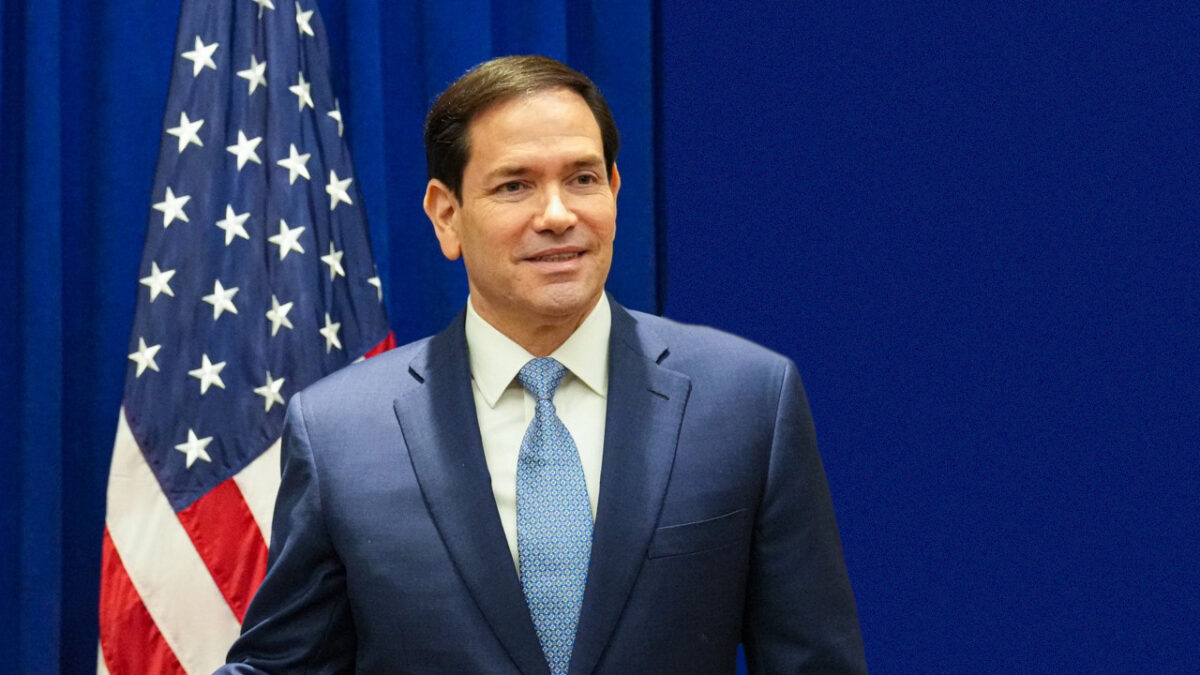
Bishop Robert Barron has warmly praised Secretary of State Marco Rubio’s address at last week’s Munich Security Conference. He highlights Rubio’s remarks as a much‑needed affirmation of the Christian roots of Western civilization and of the spiritual bond between Europe and the United States.
What Barron actually said: On X, Barron wrote that he was “impressed” by Rubio’s Munich address and singled out Rubio’s stress on the “common culture that unites Europe and America.” He noted that Rubio invoked Dante, Shakespeare, the Sistine Chapel, Cologne Cathedral, and even the Beatles as expressions of a shared Western imagination shaped over centuries. Barron summarized Rubio’s core claim this way: Europe and America “will truly flourish when each re‑discovers its spiritual mooring,” meaning the Christian faith that historically grounded their ideas of human dignity, rights, and freedom

How he interpreted Rubio’s speech: Barron read the speech through the lens of Christopher Dawson and Pope Benedict XVI, arguing that Rubio was recovering their insight that Western culture is “grounded ultimately in the Christian faith.” He affirmed Rubio’s contention that reverence for the dignity of the individual, human rights, political freedom, and equality “comes, in the final analysis, from the Christian Gospel,” not from secular ideology alone. Barron framed the address as more than policy: a powerful reminder and a call for Europe and America to acknowledge Christianity as the wellspring of Western civilization’s moral and cultural vision.
Further comments and controversy: In subsequent commentary, Barron contrasted Rubio’s thick account of Western culture with the remarks of Rep. Alexandria Ocasio‑Cortez, who described that cultural foundation as “thin” and ever‑changing. He warned that reducing culture to material conditions and class struggle is “right out of the Marxist playbook,” echoing Marx’s view of culture as a mere superstructure atop a materialistic economic base.
Rubio’s civilizational stakes: For his part, Rubio cast migration and border control as central to maintaining “cultural continuity and public cohesion,” arguing that large, unmanaged flows can strain the shared norms that make democracy and solidarity possible. Sympathetic Catholic voices have summarized Rubio’s point this way: he named the cultural and religious foundation of the West without apology, insisting that the deepest bond uniting the United States and Europe is rooted in a shared Judeo‑Christian inheritance, not in vague “values”
A biblical and poetic warning: At moments like Munich, it is hard not to recall how “the Lord answered Job out of the whirlwind” and asked, “Who is this that darkens counsel by words without knowledge?” When our political class speaks of “values” while severing those values from their Creator, they risk precisely doing that—darkening counsel with confident words detached from wisdom.
As Rubio reminded his listeners of the Christian roots of the West, one also thinks of Kipling’s warning in Recessional: if we are “drunk with sight of power” and use “such boastings as the Gentiles use,” forgetting the God of our fathers, then our civilization is already hollowed out. God must be “with us yet—lest we forget, lest we forget.”
If Europe and America are to remain more than trading blocs, they must remember the Christian faith that first told them what a human being is worth. That is the nerve Rubio touched and that Bishop Barron was right to notice.