Environmental non-governmental organizations (NGO) might have been slapped in the face with the election of President Trump who has been dismantling agendas so dear to their cause, and cutting money spigots off, but it has prompted an old strategy for saving the planet. Rather than messing with the bloated federal government, target local governments.
The Center for Large Landscape Conservation (CLLC), a United Nations (UN) affiliated International Union for Conservation of Nature (IUCN) member, is ready to lead the charge. CEO Gary Tabor has had his hands in numerous environmental groups that have caused headaches in Idaho including Yellowstone to Yukon, Heart of the Rockies, Network for Landscape Conservation, and some others, while being a working buddy with the IUCN.

Anyhoo, CLLC has a new hot off the press program, Integrating Wildlife Habitat Connectivity into Local Government Planning, that targets city and county comprehensive plans (CP). These plans are required by Idaho Code for every city and county. In general, the purpose is providing guidance for growth and land use planning, which is also outlined in Idaho Code, but the CLLC program extends far beyond just a connectivity agenda.
CLLC thinks it would be a great idea to sneak its conservation agenda into CPs, but it is a rehash of prior attempts. These plans are typically updated around every 5-10 years but can be amended in between by either the Planning and Zoning Commission, or by a citizen. Updates are a good time for NGOs to swoop in for massive conservation changes, but for a citizen it is also a good time to step in and block those land grabbing ideas. Just as well, a citizen can petition for an amendment that prevents connectivity agendas, and a host of other nonsense, from being integrated into a CP.
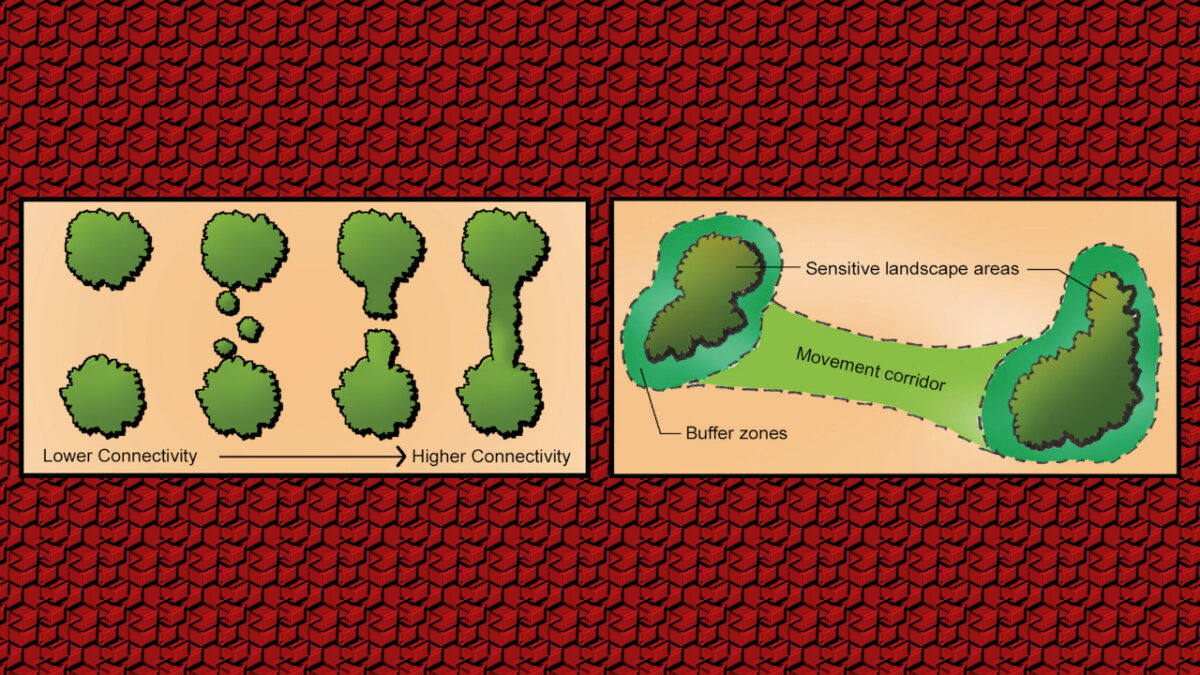
So what kind of changes is CLLC looking for? Impediments for animals moving from place to place are roads and housing which CLLC calls fragmentation as it impedes wildlife movement. In order to protect those wildlife paths, any impediment needs to be removed and the path preserved. So that means taking of land.
Noted in this program is that “the ability of local officials to guide development in support of conservation goals depends heavily on what is codified in local plans and ordinances (pg 9).” Zoning regulations and ordinance are meant to be consistent with the CP. What CLLC wants merged into zoning regulations and ordinances are wildlife corridor protections; habitat-sensitive subdivision design (cramming houses together so the wildlife can romp in the front yard); setbacks and buffers; cluster development; transfer of development rights (with many drawbacks); density bonuses for conservation (including Idaho); and prioritizing undeveloped and connected open spaces for acquisition and protection, a Nature Conservancy specialty (pg 10).
It doesn’t end there, pages 13-15 lists a whole slew of other “strategies” to take over the CP, even mentioning “tools” local governments can use to achieve its goals on page 16!
Local government isn’t the only target, on page 23 it talks about what state legislatures can do to advance its agenda by using State Wildlife Action Plans (SWAP) and requiring “local governments to include wildlife habitat connectivity in plans and policies”.
A full list of its recommendations can be found on pages 26-39. But, in its enthusiasm, CLLC lists examples of local governments that made these CP changes starting on page 40, one of which is Teton County, Idaho (pg 48), and which ironically for citizens can be used for guidance on what should be avoided in Idaho CPs.
Now this all comes at a time that the Department of Interior (DOI) is proposing to rescind the Public Lands Rule, the God awful decree that diminished multiple-use. As that land might now be re-opened for use in multiple ways, the CLLC has to scramble to get land use shut down elsewhere for its agenda.
CLLC also partners with the National Caucus of Environmental Legislators (NCEL). Fortunately, at this time, there are no Idaho legislative members listed but it doesn’t mean CLLC isn’t engaging with them. And, one NCEL focus is opposition to the Public Land Rule ending.
So, get off your keister and get engaged with your local government and its CP, especially in rural areas located near forested or other federal land. With the potential of DOI freeing up federal land, NGOs are shifting more to blocking land use on surrounding developed land, but it will also include usurping how communities are designed, removing the right for citizens to make those decisions, unless they become involved.

2 replies on “NGOs Are Still Active”
Since approving a resolution in the Republican National Platform in 2012 opposing Agenda 21, I haven’t heard or seen one word from one Republican, state or national, concerning said resolution. Was that action just lip service to T Party members? I get no comment from Idaho GOP politicians when I ask them about it. All of the above article is about Agenda 21 proposals. As a matter of fact, I haven’t met one Republican voter that knows the content of either the Idaho State GOP or National GOP platform.
Lloyd, send me an email. It is doubtful you will ever get a response on Agenda 21, it has been lost in the dust to the 4th Industrial Revolution which is now being implemented. The target for legislators now needs to be 5G, digital money, digital ID, data centers, and AI. All of those targets are being put into place, and secondary to that Agenda 21goals will be fully implemented.