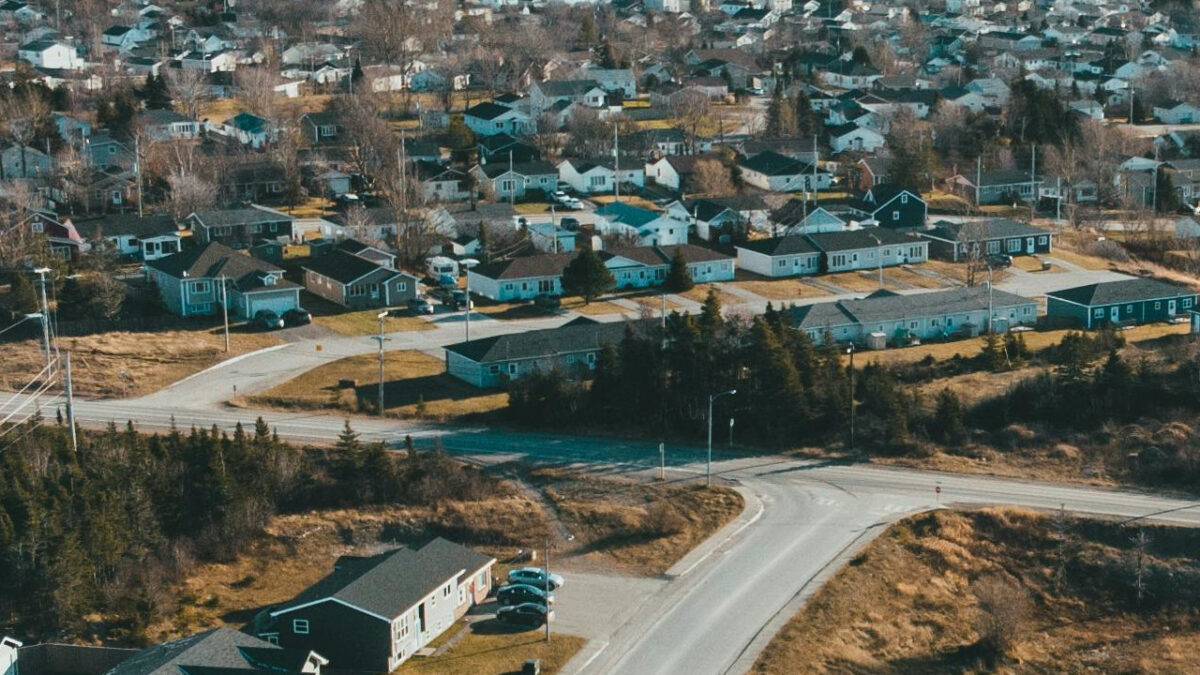
As everyone is aware, Idaho has been experiencing growth issues from California, Oregon, Washington, and other state escapees. There has been widespread growth throughout different parts of the state, and Eastern Idaho is no exception. This has allegedly placed pressure and demands for affordable housing.
The City of Blackfoot has been busy over the last few years filling up every scrap of vacant dirt with dense housing units. In doing so, they have refused to use the Comprehensive Plan for guidance, rejected public opposition, and overburdened the already strained sewer and water systems.

The public at large needs to be informed about City of Blackfoot officials and the unscrupulous ways in which they are managing growth, starting with the Planning and Zoning Commission (PZC) and its director, Travis Allen, and the City Attorney, Garrett Sandow, providing legal guidance. At the time these decisions were being made, the current Blackfoot Mayor, Scott Stufflebeam, was the PZC Chair. Because the code violations are too numerous to list, a general overview of the issue will be introduced here with subsequent articles going into more depth about the violations.
The property at issue, Highland Heights, can be found on page 7 of this document.
There is a process to approving development in cities. It starts with zoning a piece of property for residential, commercial, or other uses. Residential zoning is broken down into low, medium, and high density. Low Density residential 1 & 2 (LDR) has single family homes, Medium Density Residential 1 (MDR1) allows 14 units per acre, and MDR2 allows 28 units per acre (11-4A-5), each having different lot size requirements. Any zoning changes require public hearings which in the case of the property in question, it is not clear if or when the original residential/agricultural (RA) zoning was changed.
The applicant requested the 18-acre parcel of land for proposed development be annexed into the city with LDR2 and MDR1 zoning. However, on April 23, 2024 the PZC voted to forward a recommendation to City Council for annexation approval with LDR1 zoning. At the June 4, 2024, City Council meeting, the applicant again requested higher density with 5.11 acres as LDR2 and 13.8 acres as MDR1 zoning, along with the annexation. However the City Council approved the annexation with less dense LDR1 zoning for the full parcel. Ordinance 2256 for this annexation with LDR1 zoning was passed and approved.
The applicant later returned for reconsideration of a zoning change to higher density and the City Council approved the reconsideration on August 6, 2024. Based on what they were told by Mr. Allen at the September 3, 2024 meeting, the City Council granted the change to LDR2 and MDR1 for higher density. This rezoning request by Mr. Allen, which significantly increased density, was approved without a request to the PZC for a zoning ordinance amendment as required by IC 67-6511(2), or a public hearing as required by IC 67-6511(2)(b), both of which are major violations of the law. And again, “the Blackfoot City Zoning Map” was “amended to reflect this zone change” without any reference to an updated amendment to the Comprehensive Plan.
With this zoning change, the applicant’s plan was to build a Planned Unit Development (PUD) with 20 LDR2 single family homes with smaller lots on 5.11 acres at the parcel’s northern perimeter, and 128 denser MDR1 town homes on 13.08 acres in the center and along the parcel’s southern perimeter. Approximating that there would be a minimum of two persons per household, that is an additional 300+ people living on 18 acres of land.
At the time, Mr. Allen stated there was plenty of water and sewer services available, the zoning was consistent with the Comprehensive Plan (CP), and there would be no “significant potential adverse effects” from the proposed development.
While the claim was made that water and sewer services were “available”, the truth is for at least two years there have been ongoing complaints expressed about poor water pressure, sometimes even from the PZC themselves, while the CP Committee expressed concerns about culinary water availability for the future. On February 6, 2024, the City Council expressed Significant Concerns for Future “water availability and potential for water legislation and curtailment”.
As for the sewer services, the Idaho Department of Environmental Quality (IDEQ) found the City of Blackfoot exceeded effluent allowances and imposed requirements to fix the problems with penalties. It appears Mr. Allen thinks increasing the burden on an underperforming waste water treatment plant can be solved by building more housing units. Current Blackfoot homeowners will carry the burden for the upgrades now, with an increased 3.5% rate starting in 2027, and continued rate increases over the following years. None of these costs will be borne by the developer or potential future homeowners as these rate increases will be used to build the needed infrastructure to support that development.
Blackfoot, at this time, does not have the necessary infrastructure to service an additional 148 housing units, or potential 300+ people. Currently, the plan is to also route those 300+ people through two adjoining neighborhood streets to a main arterial road, which the CP recommends should be avoided.
The 2015 CP referenced in this matter was not, and still isn’t available on the City’s website for review by citizens. CPs are mandated by Idaho statute, and intended to be used as a guide for managing city growth in a responsible way that includes several areas for consideration. With zoning changes these plans are first amended before the change is made. However, this apparently has not been done by the PZC, instead only addressing zoning changes in code. While zoning maps must be included with CPs, zoning changes were only made to a map at the City office. As for Mr. Allen stating the zoning was consistent with the CP, that was the only consideration, while ignoring all other required areas that provide guidance for responsible growth.
CPs are typically fully updated every 5-7 years, however, in spite of a Committee working diligently for over a year to update the much outdated 2015 CP, PZC just barely forwarded it to the City Council for final approval this year.
Lastly, the issue of no “significant potential adverse effects”. On the southern perimeter of this development is what used to be the Ridge Street Landfill and is identified by the Environmental Protection Agency as a brownfield, meaning there is a “…presence or potential presence of a hazardous substance, pollutant or contaminant” on the land. The brownfield can be found just north of Wooten Way on this map. While Bingham County, who owns the land, is in compliance with the required regulatory agencies, an evaluation of the land in 2024 revealed elevated vapor levels of methane and hydrogen sulfide, and groundwater from a couple of wells “contained lead at a concentration above the Idaho threshold level”.
While this most recent posted plat of the land (last page) has numerous errors, it does show how the proposed development’s southern perimeter adjoins the brownfield. Yet, this potential health hazard has never been fully addressed by the PZC Director, City Attorney, City Council, or even fully disclosed to the public.
The last public hearing was held on February 24, 2026 where every person, except the applicant, that testified was in opposition to this development. Over the course of several years, the PZC, PZ Director, and City Council have consistently ignored, and not even acknowledged, the majority of opposition to the developments they have approved. At the hearing, the PZC approved forwarding a recommendation to City Council to approve this development. City Council has not posted when this recommendation for approval with be on the agenda.
This information just scratches the surface of the problems. IC 67-65 is the Local Land Use Planning Act (LLUPA) and all cities and counties are required to follow it. Blackfoot does have codes for this but those codes are poorly written, not being followed consistently, and in some cases meshed together because of similar language which is illegal. This is a major violation of the law. Further discussion on this will be in the next article.