
Every Thanksgiving, our family used to gather and read aloud one of two essays: “The Desolate Wilderness” or “That Fair Land.” The Wall Street Journal has reprinted both every year since 1961. When our children and grandchildren were small, the reading was a pleasant ritual. Now that they are adults, and the grandchildren nearly so, I value it more than ever. Traditions bind generations together, and they remind us of what we are giving thanks for.
That makes this year’s debate over the holiday itself hard to ignore. In 2020, Francesca Hong, a member of the Democratic Socialists of America, wrote in a social media post, “Cancel Thanksgiving.” She added, “Should have done this in 1621.” She has since repeated the sentiment in more recent remarks.

In the November 27 Wall Street Journal, Barton Swain took up the matter in an essay titled “Socialism vs. Thanksgiving.” He observed that socialists have typically chosen not to recognize any deity in the affairs of men. To “acknowledge the providence of Almighty God,” as Washington’s 1789 proclamation did, is to cede a measure of earthly power to a being who answers to no revolutionary or anyone else. A fully planned economy, he argued, cannot abide anything so messy and unpredictable as Providence.
I think Swain is right, and the point goes deeper than politics. Thanksgiving is the greatest of American holidays because it acknowledges the gifts of the Giver. Gratitude assumes there is Someone to thank. The humanist, the socialist, and the materialist have no such someone, so they end up worshiping themselves or what they have built. A planner who believes he has created prosperity has nothing to be thankful for, only something to administer.
The Biblical Roots of Prosperity: The history here is badly neglected. Swain notes that economic historians have spilled vast quantities of ink explaining the rise of market economies and their prosperity in 17th- and 18th-century Europe. An underrated factor, he writes, was widening literacy. The printing press put the Bible in ordinary hands, and Europe became reacquainted with its endlessly munificent, if also exacting, central character.
Literate people who read Scripture learned that each person is accountable to God. They learned that work has dignity, that promises must be kept, and that the individual has worth apart from the state. Those convictions shaped habits of thrift, trust, and enterprise. They also fed the Enlightenment principles of liberty that the American founders inherited.
That Christian-influenced political economy is seldom taught today. Few universities treat it seriously, and the exceptions, such as Hillsdale College and Liberty University, are the ones people tend to dismiss. A student can graduate knowing a great deal about the failures of the past and almost nothing about the ideas that produced the freest and most prosperous society in history.
Free Will: The Pillar of Liberty: God’s greatest gift to man was His Son, Jesus Christ. In my opinion, His second greatest gift was free will. Free will is the pillar on which both liberty and capitalism rest. A person who can choose can be held responsible, can be trusted with property, and can be allowed to trade, build, and fail. A system that denies the individual’s capacity to choose must replace his judgment with a planner’s. That is why central planning tends toward coercion, however good its stated intentions.
Where to Begin: The remedy is not complicated. Start with our own Declaration of Independence, which grounds our rights in a Creator, not in the favor of government. Then read The Federalist Papers, in which the framers explain how a free people might govern themselves while guarding against their own worst impulses. Read them with your children and grandchildren, just as we read the Thanksgiving essays.
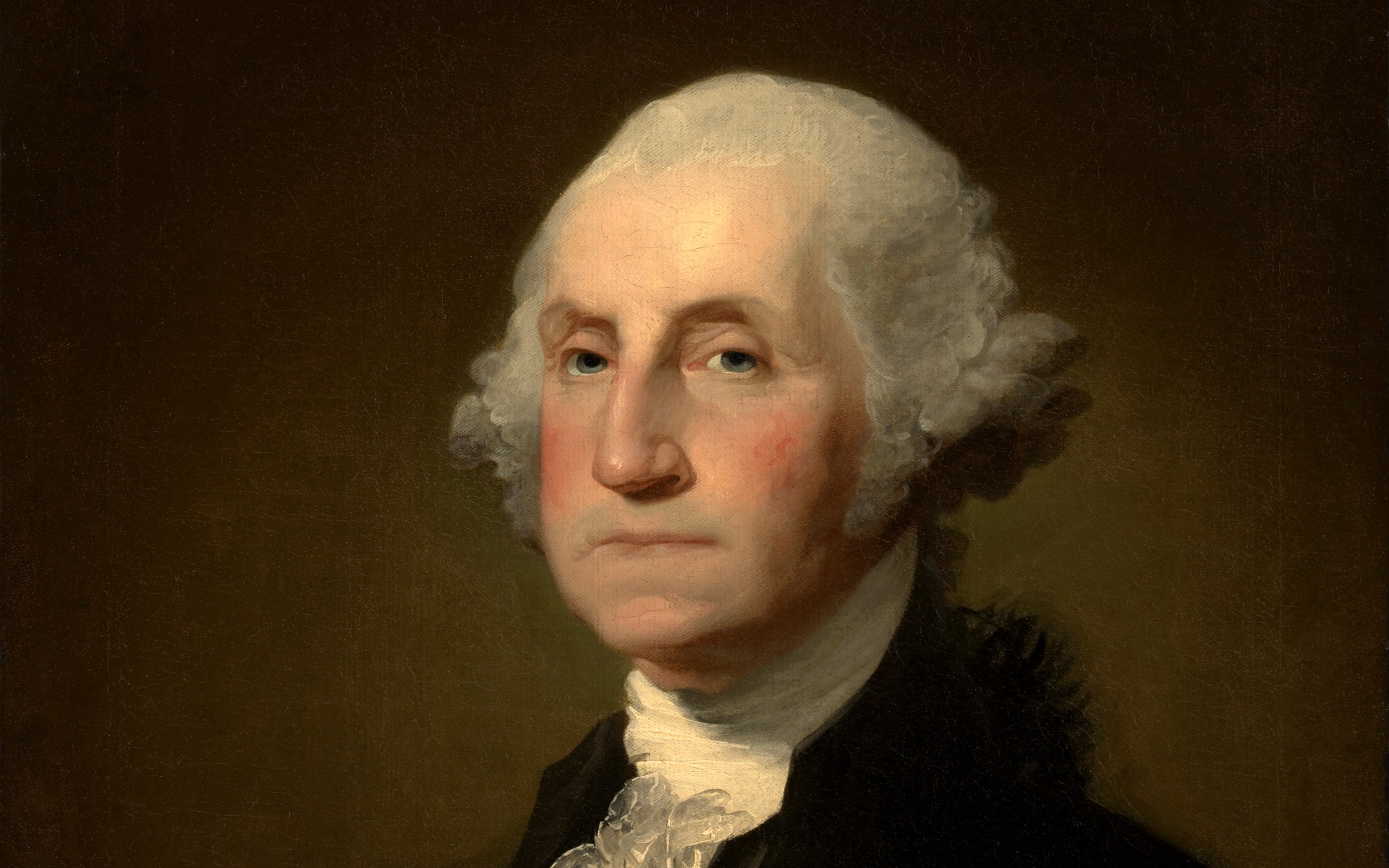
Washington’s Example: In his Thanksgiving Proclamation of 1789, George Washington showed a humility and gratitude that is missing from our political discourse today. He called it the duty of all nations “to acknowledge the providence of Almighty God, to obey his will, to be grateful for his benefits, and humbly to implore his protection and favor.” Most of all, he thanked God for the blessings bestowed on a young nation. He also asked for pardon for its transgressions. A leader who thanks God and asks forgiveness is not claiming to be the author of the nation’s good fortune.
Washington’s full proclamation follows. I would encourage every family to read it aloud at the table, alongside “The Desolate Wilderness” or “That Fair Land.” Some will say we should cancel Thanksgiving. I would say we need it more than ever.
Washington’s Thanksgiving Proclamation, New York, October 3, 1789
By the President of the United States of America, a Proclamation.
Whereas it is the duty of all Nations to acknowledge the providence of Almighty God, to obey his will, to be grateful for his benefits, and humbly to implore his protection and favor– and whereas both Houses of Congress have by their joint Committee requested me to recommend to the People of the United States a day of public thanksgiving and prayer to be observed by acknowledging with grateful hearts the many signal favors of Almighty God especially by affording them an opportunity peaceably to establish a form of government for their safety and happiness.
Now therefore I do recommend and assign Thursday the 26th day of November next to be devoted by the People of these States to the service of that great and glorious Being, who is the beneficent Author of all the good that was, that is, or that will be– That we may then all unite in rendering unto him our sincere and humble thanks–for his kind care and protection of the People of this Country previous to their becoming a Nation–for the signal and manifold mercies, and the favorable interpositions of his Providence which we experienced in the course and conclusion of the late war–for the great degree of tranquility, union, and plenty, which we have since enjoyed–for the peaceable and rational manner, in which we have been enabled to establish constitutions of government for our safety and happiness, and particularly the national One now lately instituted–for the civil and religious liberty with which we are blessed; and the means we have of acquiring and diffusing useful knowledge; and in general for all the great and various favors which he hath been pleased to confer upon us.
and also that we may then unite in most humbly offering our prayers and supplications to the great Lord and Ruler of Nations and beseech him to pardon our national and other transgressions– to enable us all, whether in public or private stations, to perform our several and relative duties properly and punctually–to render our national government a blessing to all the people, by constantly being a Government of wise, just, and constitutional laws, discreetly and faithfully executed and obeyed–to protect and guide all Sovereigns and Nations (especially such as have shewn kindness unto us) and to bless them with good government, peace, and concord–To promote the knowledge and practice of true religion and virtue, and the encrease of science among them and us–and generally to grant unto all Mankind such a degree of temporal prosperity as he alone knows to be best.
Given under my hand at the City of New York the third day of October in the year of our Lord 1789.
Go: Washington
Washington issued a proclamation on October 3, 1789, designating Thursday, November 26 as a national day of thanks. In his proclamation, Washington declared that the necessity for such a day sprung from the Almighty’s care of Americans prior to the Revolution, assistance to them in achieving independence, and help in establishing the constitutional government.

Leave a Reply