
“The race is often won before it starts.” “The will to win is not as important as the will to prepare to win.”
“Keep running, because you don’t know where the finish line is.”

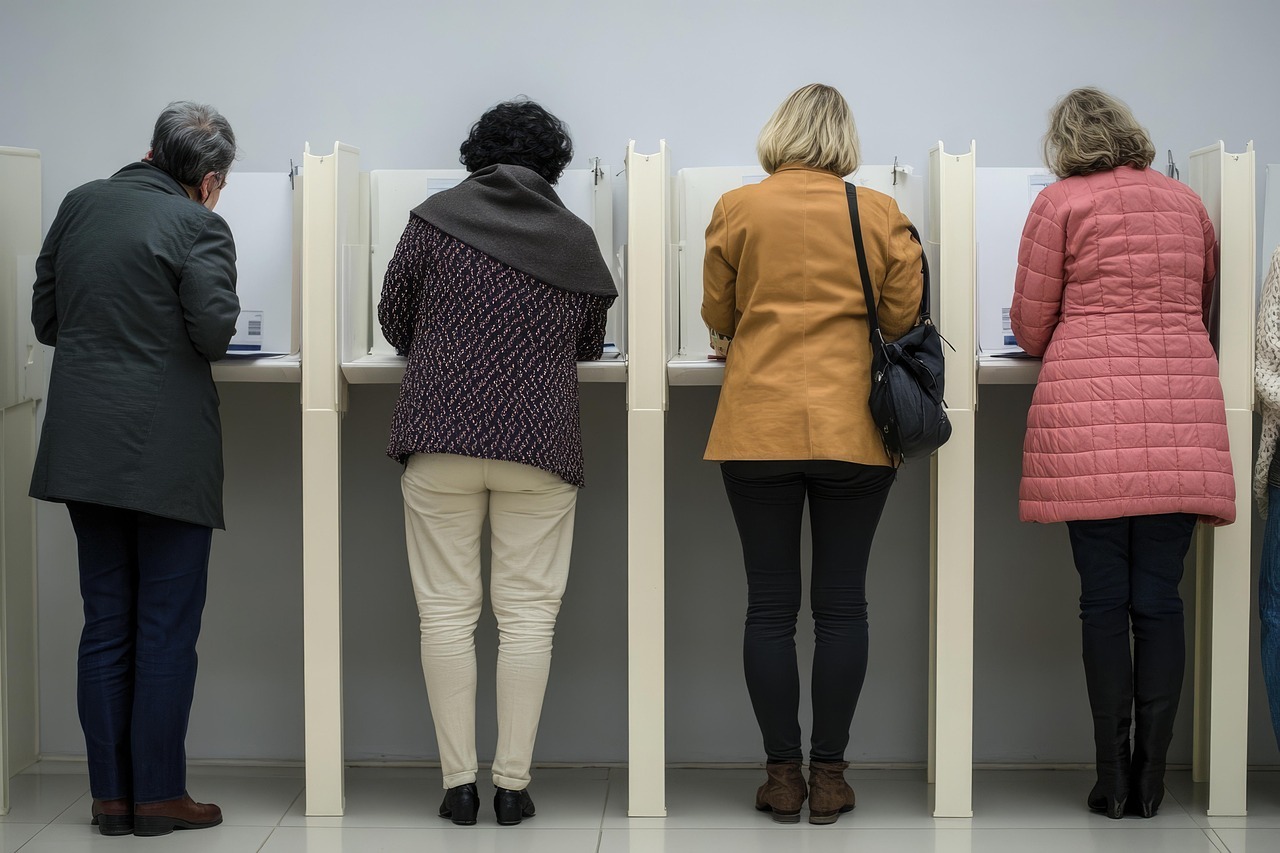
These familiar lessons from competition offer a way to understand politics. We may believe we are approaching the conclusion of an election when we are actually somewhere in the middle of a much longer contest. Election Day supplies a result. It does not necessarily reveal when the decisive work occurred—or when the next race began.
There is something almost relative about our political perspective. Inside a campaign, candidates, supporters, and opponents move together through the same news cycles, polling reports, and controversies. We measure our progress against one another. Someone standing outside that commotion might recognize a different race altogether: a struggle over the convictions that will shape elections for generations.
I learned something about uncertain finish lines while stationed with the Marines at Camp Lejeune. On Saturday mornings, we participated in a race that began in front of the Officers’ Club. We lined up without knowing precisely where we would finish or how far we would run. The course might cover six to eight miles. More than one junior officer exhausted himself because he assumed the finish line was just ahead. Success required endurance, judgment, and point-to-point navigation—a skill I did not possess. I soon learned to position myself behind experienced enlisted sergeants rather than enthusiastic young officers. On more than one occasion, those officers became lost. I soon stopped following them.
The lesson stayed with me: formal education and rank do not necessarily provide the knowledge a particular situation requires. The sergeants understood the terrain. Their practical experience mattered more than someone else’s confidence. Politics offers similar lessons. Expertise deserves respect, but it must be tested against experience and results. A confident prediction does not establish that its author understands either the course or the distance remaining. That is why I believe we should regard the approaching election not simply as an ending, but as another stage in a continuing contest.
Whatever one thinks of President Trump, his political career invites a distinction between a setback and a final defeat. The same distinction matters in business, invention, athletics, and public service. Failure can become information—provided we learn from it rather than surrender to it. Think how many times Thomas Edison, Henry Ford, Donald Trump and JR Simplot failed. Nobody missed more three-foot putts in competition than the Great Jack Nicklaus. Even great golfers miss short putts. Champions distinguish themselves not by avoiding every mistake, but by preparing, adjusting, and continuing. The focus on the process and not the result.
The fair casting and accurate counting of ballots are indispensable. But ballots conclude only one phase of a process. Long before voters enter a polling place, families, churches, schools, workplaces, and communities help shape what they believe deserves their support. My central argument is that changes in culture often precede changes in political priorities. Elections register convictions that have been forming for years.
Consider the generations shaped by the Depression, the Dust Bowl, and World War II. Their experiences were not identical, nor were their political beliefs. Nevertheless, hardship taught many of them that security was fragile, sacrifice unavoidable, and advancement dependent on work, family, and mutual obligation. Government played an important role in their lives, but it could not supply courage, perseverance, or personal responsibility. Those qualities had to be cultivated elsewhere.
My concern is that we increasingly ask political institutions to provide what only a healthy culture can sustain. When citizens exchange responsibility for promises of security, they risk becoming dependent on authorities whose power they may later find difficult to restrain.
John Adams understood that political transformation begins beneath the surface of official events. Writing to Hezekiah Niles on February 13, 1818, he explained: “The Revolution was affected before the war commenced. The Revolution was in the minds and hearts of the people; a change in their religious sentiments of their duties and obligations.”. Adams described a fundamental reassessment of authority. While Americans believed the king governed justly, they felt obligated to support him. When they concluded that royal authority threatened their lives, liberties, and property, their understanding of allegiance changed. He called that transformation in their principles, opinions, sentiments, and affections”.
Independence followed a change in moral allegiance. The institutions came afterward. I believe we are experiencing another struggle over moral allegiance—not a repetition of the American Revolution, but a dispute about the sources and limits of legitimate authority. In my view, our inheritance of Biblical morality, classical reasoning, Natural Law, and constitutional restraint is being challenged by an outlook that increasingly treats government as society’s ultimate provider and moral referee. The danger is not that every secular thinker rejects morality or that every public program threatens freedom. The danger arises when we cease to recognize any moral authority above political power. A government that claims the authority to define every right may eventually claim the authority to withdraw every right.
The twentieth century warns us against making political power absolute. Nazi Germany and its collaborators murdered six million Jews in the Holocaust and millions of non-Jewish victims. Such crimes remind us of what happens when a regime denies the humanity of those it rules. Millions died in Soviet Russia after WWII from starvation and the failure of a flawed economic experiment in “Command and Control” economy. The same thing happened in Communist China after “The Great Leap Forward.” And Cambodia and Cuba… etc.
Winning an election cannot, by itself, repair a damaged moral culture. Neither can losing one excuse us from our obligations. The preparation begins when our children are born. It continues in the examples we set, the responsibilities we accept, the history we teach, and the standards we refuse to abandon. It continues when we help our children raise their children. We should vote, organize, debate, and hold officials accountable. But we should not mistake those necessary activities for the whole race. The deeper contest concerns what kind of people we are becoming—and what kind of republic such a people can sustain.
The finish line is not yet in sight. Keep running. “As it was in the beginning…”

Leave a Reply