A free press that hides the truth from voters may still be constitutional—but it has betrayed the Madisonian ideal it was given to serve.
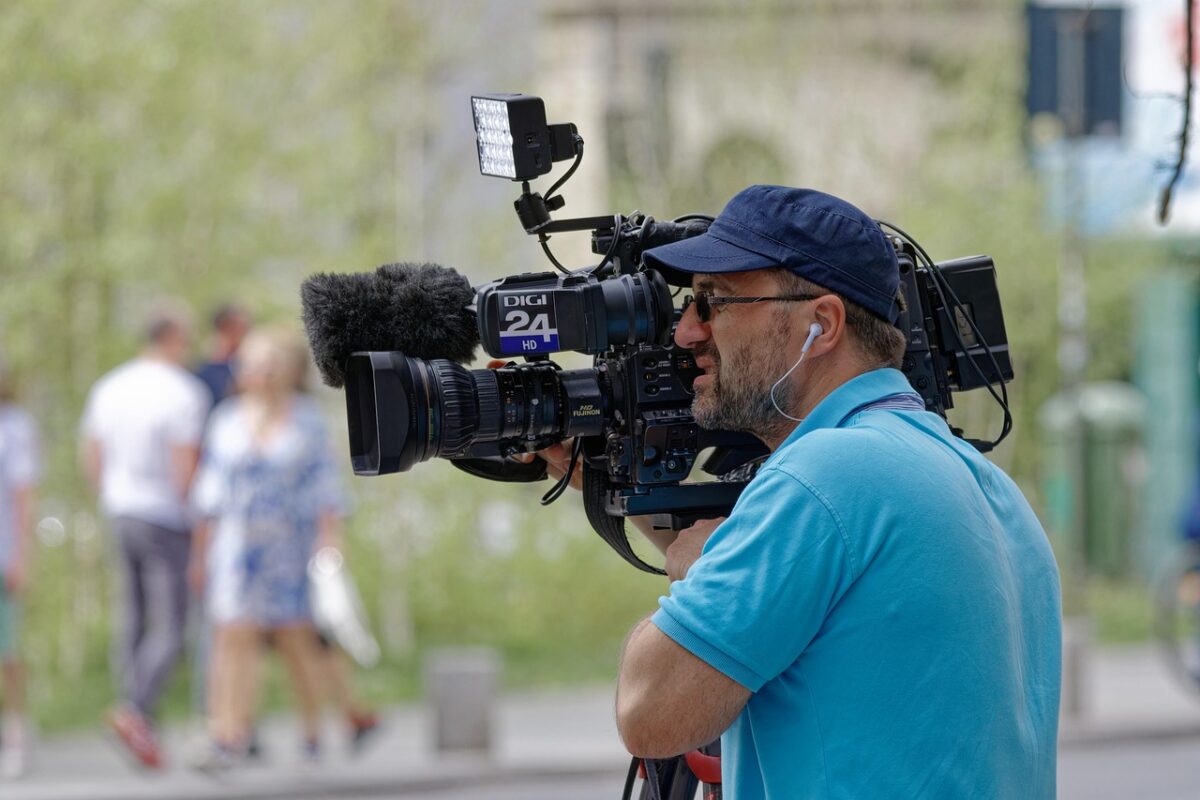
The Fourth Estate once named something noble: the public press and journalists as a distinct power in society, standing alongside clergy, nobility, and commoners in early modern Europe. The press emerged as an informal “fourth estate” because it could scrutinize the other three, exposing their failures to the wider public. In the Anglo–American tradition that shaped our Founding, the press was not meant to be an ornament of power. It was meant to be its watchdog.

James Madison, chief architect of the Bill of Rights and primary author of the First Amendment, defended a remarkably expansive liberty of the press. He did not do so because he believed editors and pamphleteers were virtuous. He did so because he believed citizens in a republic need unfiltered knowledge of the “merits and demerits” of those in power in order to govern themselves wisely. In his 1800 “Report on the Virginia Resolutions,” written in opposition to the Sedition Act, Madison argued that even a wildly irresponsible press was preferable to any system of official control. A noisy, partisan, sometimes scurrilous press was, in his judgment, less dangerous than a tidy press scissored by government.
But official control does not have to be formal or legal to be real. When major news organizations in a supposedly free country decide, in near unison, not to air or to bury a President’s national address on election integrity and legislation like the SAVE Act, we are not witnessing a neutral judgment about newsworthiness. We are seeing systematic non‑coverage of a topic that cuts sharply against these outlet’s preferred political narrative. That is not just a lapse. It is media bias by a partisan press—agenda‑setting gatekeeping at precisely the point where public opinion might be moved.
Today’s media bias is often more about omission than commission. Modern outlets influence public life less by boldfaced lies than by deciding which events, arguments, and facts count as “news” in the first place. Stories and perspectives that flatter their cultural tribe, economic patrons, or embedded bureaucratic sources receive saturation coverage; stories that challenge those interests are minimized, delayed, or dismissed as fringe. This is propaganda by selection rather than propaganda by decree, and it is perfectly legal. But it is devastating to any serious commitment to the truth. “All the news that’s fit to print” has been quietly replaced by “all the news that fits our story.”
From a Madisonian standpoint, this is not merely bad journalism. It inverts the purpose of the press’s constitutional protection. The press exists to serve as a conduit of information that allows the people to judge those who govern them. A press that functions instead as a filtration system—blocking or slow‑walking facts that embarrass its allies—ceases to be a check on power and becomes a shield for it. By keeping inconvenient information from reaching citizens in a timely and intelligible way, it helps entrench the very officials and policies that most require scrutiny.
None of this is to say that such conduct is unconstitutional. Legally, these editorial decisions remain fully protected by the First Amendment. The Constitution restrains government action, not newsroom folly or cowardice. Madison himself cautioned that it was “better to leave a few of its noxious branches to their luxuriant growth, than to empower the government to prune them.” That remains wise: the cure of state control would be far worse than the disease of media arrogance. Yet it is precisely because law cannot and should not police bias that we have to be candid about what is happening. A press that uses its freedom to curate reality around a fact‑light narrative has abandoned its vocation as sentinel of the people. It occupies the legal shelter Madison built but no longer serves the purpose for which that shelter was constructed.
A related corruption has crept in through the side door. Especially since Donald Trump arrived on the national scene, Americans have been drenched in stories sourced to “unnamed officials at the highest levels of government.” In theory, anonymity protects the vulnerable truth‑teller. In practice, it is often a euphemism for deliberate leaks by agency heads and senior bureaucrats who want to shape the news cycle without accountability. When a cabinet official or intelligence chief spoon‑feeds talking points to a reporter, and that reporter obligingly publishes them under the mystique of “senior officials,” the journalist is no longer functioning as an independent member of the Fourth Estate. He has become a political operative by proxy—an unregistered arm of the very government he is supposed to check. At that point, we are brushing dangerously close to the fusion of state and media the First Amendment was written to prevent.
The practical conclusion ordinary citizens can draw is simple if sobering. The press has been catastrophically wrong, again and again, and almost always in ways that conveniently support one side of our political divide. Consider only a short, off‑the‑cuff list of narratives where the establishment media sounded more like government press secretaries than independent investigators:
- “I did not have sex with that woman.”
- Y2K panic.
- Covid mitigation and treatment
- Iraqi weapons of mass destruction.
- The painless promise of “green energy” transitions.
- Trump–Russia collusion treated as settled fact.
- The infamous “pee tape” rumor mill.
- Election fraud portrayed as literally unspeakable.
- Health‑care reform sold on “you can keep your doctor” and your plan.
- Assurances that the border is secure, that illegal immigration does not affect jobs or wages, that proof of citizenship is a civil‑rights violation.
- Claims that housing policy caused homelessness, followed by claims that homelessness is essentially unsolvable.
- The idea that mass methadone distribution and taxpayer‑funded syringes would tame addiction and reduce street despair.
- Soothing declarations that “elections are secure,” without serious engagement with procedural flaws or public distrust.
You can add to this list. The point is not that every one of these stories was false in every detail. The point is that time after time, the press marched in lockstep with the priorities of a governing class and its permanent bureaucracy, only to backtrack after the damage was done. That is the pattern of a propaganda arm, not an independent Fourth Estate.
Madison gave the press its constitutional shield on the assumption that, however partisan and imperfect, it would understand itself as guardian of the people’s right to know, not guardian of a favored regime’s right to rule unbothered. The shield still stands. The question is whether we, as citizens, will insist that those who shelter behind it behave once more like sentinels—or whether, until they do, we will have the courage to turn them off, tune them out, and seek the truth elsewhere.