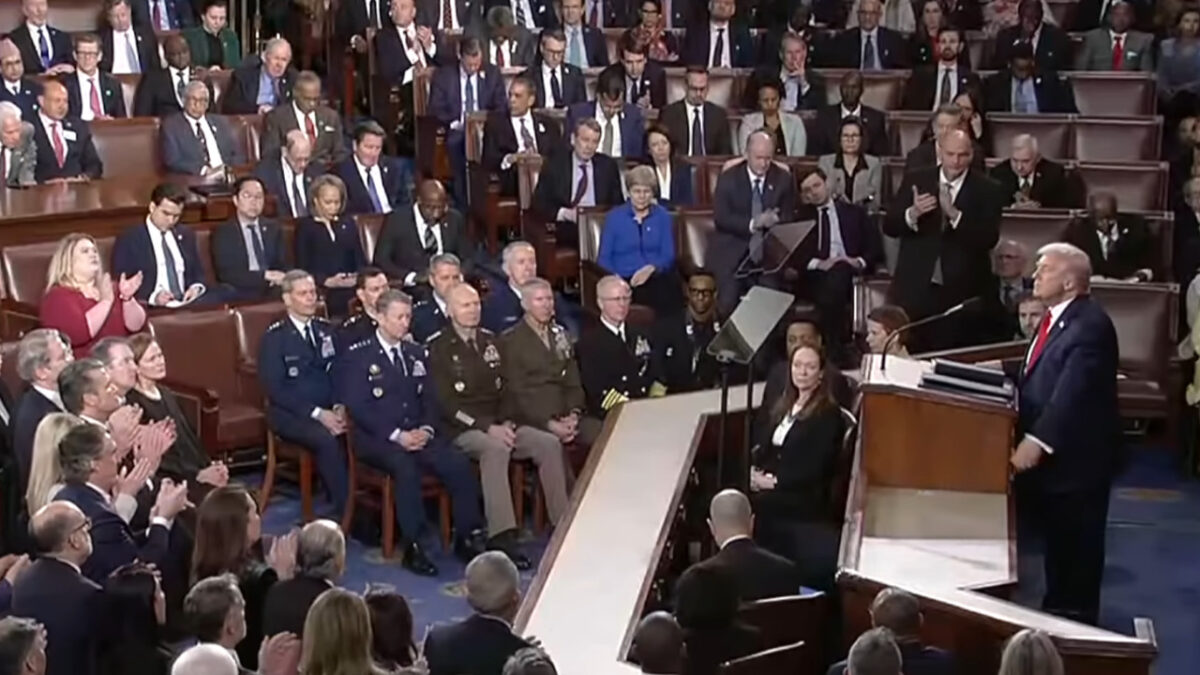
So tonight, I’m inviting every legislator to join with my administration in reaffirming a fundamental principle. If you agree with this statement, then stand up and show your support: The first duty of the American government is to protect American citizens, not illegal aliens.”
Those words from President Donald J. Trump’s State of the Union address last Tuesday drew a moment that revealed more than applause lines ever could. Not a single Democratic lawmaker stood. Not one rose to honor the families of girls killed by illegal immigrants, or to acknowledge the cost of failed policies that turn compassion into negligence.

What explained that silence? Not policy—it was hatred. Hatred for Donald Trump, yes, but also hatred for the millions of Americans who support him. The left’s moral intolerance now extends beyond disagreement; it seeks to erase dissent, punish nonconformity, and sanctify spite as virtue. Have you ever seen conservative Republicans “cancel” their opponents for holding different beliefs? It is the haters, not the hated, who are trying to shut down debate and demonize opposition.
When political hatred eclipses human decency, it becomes more than a partisan problem—it becomes a moral one. When hatred masquerades as virtue for so long that its defenders imagine themselves righteous, that sickness demands not a political reply but a moral reckoning.
C.S. Lewis understood this inversion of virtue. In The Screwtape Letters, the senior tempter advises that the easiest way to corrupt a soul is not to destroy virtues, but to drive them outward—make them something admired in theory rather than practiced in life. When kindness, compassion, or justice are detached from truth, they turn into sentimental props that mask cruelty. A person may speak the language of love while nurturing envy and vengeance in the will.
In Mere Christianity and That Hideous Strength, Lewis warned that every true virtue depends on its companions. Justice without truth decays into tyranny; mercy without discipline becomes indulgence. “Fashionable virtues” divorced from a moral framework are counterfeit—they serve ego, not God, and power, not principle.
That is our danger today. A judge, legislator, or city councilman may still use the word “justice,” but when loyalty to party, applause, or personal gain defines his decisions, the word has been hollowed out. Lewis called this moral inversion: when the vocabulary of virtue survives, but its substance has been colonized by vice.
One of Lewis’s most haunting lines captures our present condition: It is better to live under robber barons than under omnipotent moral busybodies. The robber barons’ cruelty may have limits; those who torment us for our own good will torment us without end, for they do so with the approval of their own conscience.
The haters will eventually destroy themselves—vice always does. The question is what they will destroy with them: institutions, livelihoods, and the moral confidence of a nation. When that reckoning comes, the rebuilding will again fall to those who still believe that virtue is not a slogan but a lifelong habit—the true work of a free people.