State Senator Brian Lenney’s recent essay, “Idaho Built an Ag Empire on Modern Day Slavery,” was an act of moral clarity that deserves not just notice, but public thanks. In an era when too many officeholders treat human beings as abstractions in a talking‑points war, Lenney had the courage to name what is happening in Idaho’s fields, dairies, and job sites: the systematic exploitation of vulnerable immigrants whose labor underwrites our prosperity while their humanity is quietly discounted.
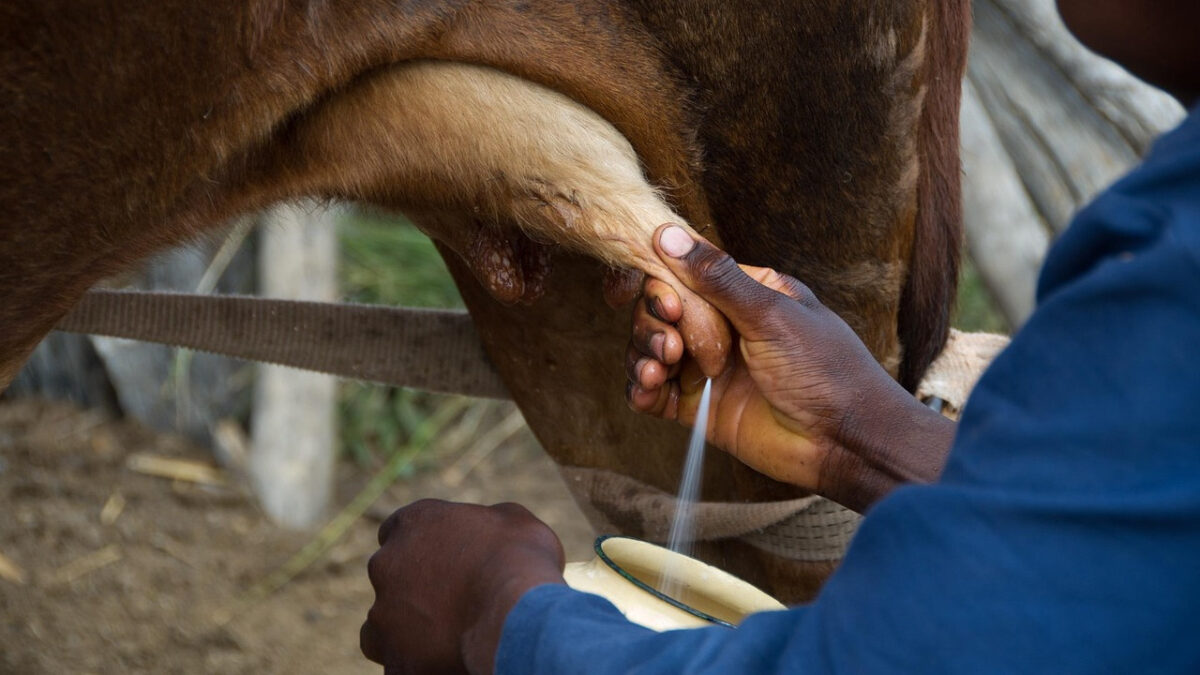
The courage to name a hard truth: Lenney’s argument is straightforward and devastating: a multibillion‑dollar agricultural and construction economy in Idaho depends heavily on workers who live in the shadows, lack legal status, and are thus uniquely exposed to coercion and abuse. These men, women, and children milk our cows, harvest our crops, pour our concrete, and clean our hotel rooms, yet often do so without formal employment, written contracts, or enforceable rights. When a worker can be fired, evicted, and deported for resisting unsafe conditions or unpaid wages, the line between “cheap labor” and “modern slavery” becomes vanishingly thin.

Industry spokesmen protest that they “couldn’t stay in business” without this reservoir of low‑wage, right‑less labor. That plea should sound familiar. It is nearly identical to the antebellum claim that Southern agriculture would collapse if human beings were not held as chattel. The logic is the same: an economic model has been constructed on the assumption that certain people’s lives can be discounted in order to preserve someone else’s margin.
Slavery’s many faces, old and new: Americans rightly recoil from the word “slavery” because we associate it with chains, auctions, and plantation fields. But slavery, broadly understood, has always taken many forms. Chattel slavery, in which people are treated as movable property that can be bought, sold, and inherited, scarred the American republic for generations and was mirrored in the wider Atlantic world. Debt bondage, where families are trapped working to satisfy real or fabricated obligations, has persisted from the ancient Mediterranean to modern South Asia.
Other forms, like state and military slavery, domestic servitude, and sexual slavery, have also scarred human history, from imperial courts and households to contemporary trafficking networks. The essential features are constant: control over movement; coercion or credible threats; dependence on the “master” or employer for survival; and the stripping away of legal recourse. Modern human trafficking in agriculture, factories, and the sex trade fits squarely within that lineage, even when statutes nominally prohibit slavery.
The United States has never been innocent of these practices. Several early state constitutions and the Northwest Ordinance of 1787 contained explicit prohibitions on slavery in new territories, and the federal government formally banned the transatlantic slave trade in 1807. Yet bondage did not vanish overnight. It mutated, surviving in different guises through peonage, Jim Crow labor systems, and now the exploitation of undocumented and guest workers who live in legal gray zones.
Idaho’s hidden workforce: Idaho is no exception. In fact, the state’s economic profile makes it particularly vulnerable to these abuses. Dairy, livestock, and crop agriculture constitute a major share of Idaho’s farm employment, and a very high proportion of that workforce is foreign‑born. In dairies alone, research has shown that immigrants make up the overwhelming majority of hired labor, with many workers lacking legal status.
More recently, federal data show that Idaho employers have sought thousands of H‑2A guest workers each year to meet ongoing labor needs, especially as domestic workers have proven unwilling to take low‑wage, hazardous, year‑round agricultural jobs. The combination of undocumented workers and guest workers creates a labor pool that is structurally easy to exploit: housing and transportation are often controlled by employers, immigration status hangs over every dispute, and language barriers limit access to legal help.
Construction and hospitality lean on the same pattern. Unauthorized immigrants play a key role in Idaho’s agriculture, hospitality, and construction sectors, with estimates suggesting tens of thousands of such residents whose labor and spending generate hundreds of millions of dollars for the state economy. Yet the very conditions that make them “essential” to employers—youth, physical stamina, willingness to accept dangerous work—also make them expendable when they are injured, sick, or inconvenient.
The moral responsibility of employers and legislators: The central moral question is simple: who bears responsibility for this system? Some will say the blame lies entirely with “illegal immigrants” who cross borders without authorization. That is convenient—and wrong. There is no market for undocumented labor without employers willing to hire, pay off the books, and look the other way when safety rules and wage laws are broken.
Idaho’s own debates over mandatory E‑Verify—a system that would require employers to verify the work authorization of new hires—highlight this tension. Business groups, including segments of the dairy industry, have opposed strict verification mandates while simultaneously lobbying for expanded visa programs that preserve access to foreign labor. They want stability and deniability at the same time: a steady stream of vulnerable workers, but no legal accountability when those workers are abused.
Lenney’s great service is to insist that this cannot be framed as an “immigration issue” alone. It is a human rights issue and, more deeply, a moral issue. The people picking our crops and hanging our drywall may have broken civil immigration laws, but those who profit from their fear and silence are breaking something more fundamental: the dignity that every person bears as an image‑bearer of God. When a man is compelled by circumstance to accept a job that injures his body and leaves his children uninsured, he has fewer real choices than we like to admit. His employer, by contrast, has many.
Gratitude for a necessary beginning: For all these reasons, Senator Lenney deserves thanks. He has not “solved” the problem of modern slavery in Idaho, but he has done something prior and indispensable: he has forced us to see it. He has told constituents hard truths about the industries that fund campaigns, sponsor community events, and style themselves as the backbone of “Idaho values.”
The next steps are legislative and cultural. Legislators should put employers, not migrants, at the center of enforcement, strengthening penalties for wage theft, unsafe working conditions, and retaliation against whistleblowers. They should expand access to legal representation and basic health protections for workers whose bodies, quite literally, keep Idaho’s economy running. Churches and civic groups should examine their own complicity when congregants and donors benefit from these arrangements while professing a gospel that proclaims liberty to the captives.
For now, though, the first right response is a simple one: thank you, Senator Lenney, for telling the truth. In a state that has built wealth on the backs of the unseen, the willingness to see—and to say what one sees—may be the most radical act of public service.