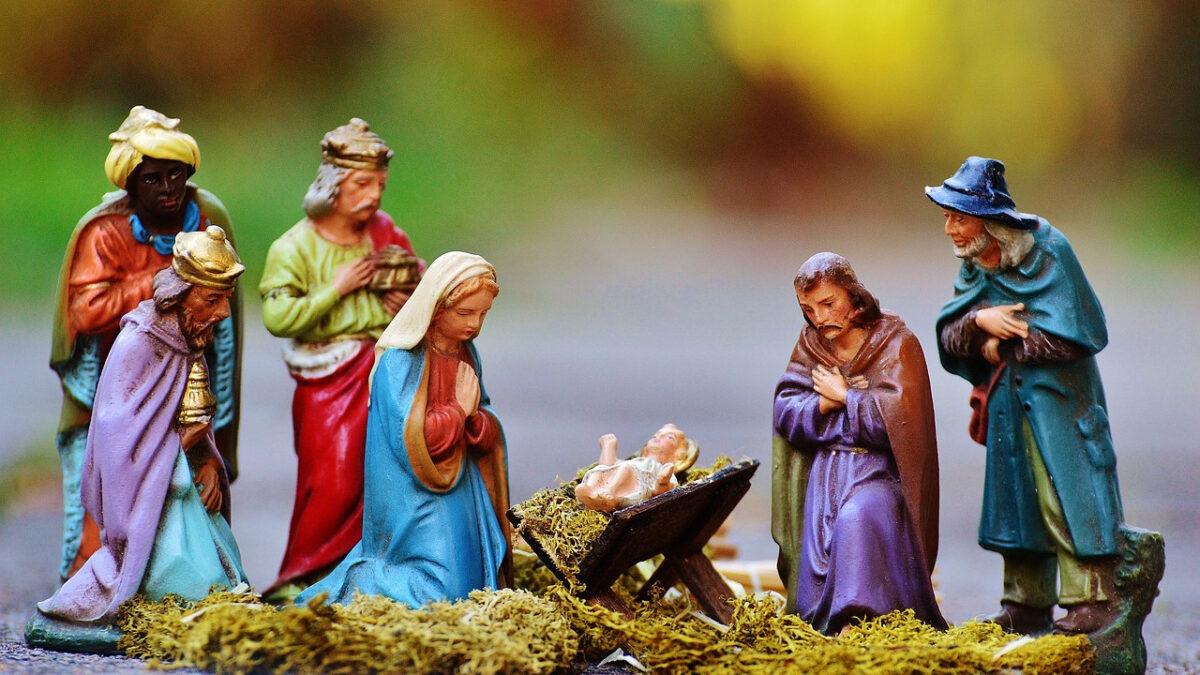
Every Christmas Eve since 1949, The Wall Street Journal has reprinted former editor Vermont Royster’s timeless essay, “In Hoc Anno Domini”. It reminds readers that the world changed forever on the night Jesus was born—and that from that moment began humanity’s long, uneven march toward freedom. Reprinted often in The Gem State Patriot News, Royster’s piece remains worth pondering each Christmas, for its message is as relevant now as ever.
Two thousand years ago, Rome ruled the known world. Civil order was secure under imperial might, but liberty was crushed beneath the heel of the state. From Augustus to Tiberius, coercion reigned. Human life was cheap; power was everything. As Royster wrote, “There was one state, and it was Rome. There was one master for it all, and he was Tiberius Caesar.…And most of all, there was everywhere a contempt for human life.”

Yet into that darkness came light. In a manger in Bethlehem, a child was born whose teachings would pierce the hardness of empire. “Render unto Caesar that which is Caesar’s,” he said—and then, in words that forever altered civilization, “What you do to the least of my brethren, you do unto me.”
Whether one believes in the divinity of Jesus Christ or not, it is undeniable that the world’s moral and political trajectory changed at His birth. Even secular thinkers, including the atheist Ayn Rand, acknowledged that this event marked the beginning of a two‑millennia journey toward liberty and human dignity. That journey has never been straight, nor uninterrupted; every generation has faced the temptation of tyranny. Today, that temptation again knocks at our door.
The struggle between liberty rooted in moral law and power rooted in human pride defines every age. Royster’s editorial reminds us that the march from Bethlehem to Philadelphia—the birthplace of American independence—was guided not by accident but by faith. Liberty, after all, flows from God’s second greatest gift to humankind: free will.
Our Founders understood this intimately. When they declared independence, they did so not as rebels without cause but as moral agents appealing to a higher authority. The opening lines of the Declaration of Independence are unmistakable in their moral grounding:
“To assume among the powers of the earth, the separate and equal station to which the Laws of Nature and of Nature’s God entitle them…. We hold these truths to be self‑evident, that all men are created equal, that they are endowed by their Creator with certain unalienable Rights, that among these are Life, Liberty and the pursuit of Happiness.”
Those words are not mere poetry; they are the foundation of our legal and constitutional order. The Founders saw government not as the source of rights, but as their guardian. Governments, they wrote, “derive their just powers from the consent of the governed.” This assertion rests on the moral truth that liberty is sacred because it is God‑given.
Abraham Lincoln understood this connection between moral and political truth when he delivered his address at Gettysburg. In just 272 words, he re‑anchored the Republic to its founding ideals—reaffirming that the Civil War was not merely a political struggle but a moral one. For eighty‑seven years—“four score and seven”—since the Founding, the nation had failed to resolve the contradiction between its creed of liberty and the sin of slavery. Many presidents—Washington, Jefferson, Adams, Madison, Van Buren—recognized slavery’s evil but hesitated to act decisively. Nine states abolished it soon after the Constitution’s ratification, and the Northwest Ordinance forbade it twice. Yet only in 1860, when the Republican Party declared in its platform that the nation would no longer compromise with the institution, did the issue come to an unavoidable crisis.
That crisis became secession—an insurrection, not a rebellion. The distinction matters. Rebellions are grounded in truth and in the natural and biblical law of human freedom. Insurrections are not. The South’s claim to moral legitimacy crumbled because it violated the very precept delivered in Genesis 3:19: “By the sweat of your brow you will eat your food.” To deny others the fruits of their labor was to deny them their God‑given right to life and liberty.
The long arc of history from Bethlehem to Gettysburg, from darkness to light, is not a straight line. It is marked by shadow and suffering, by sin and moral renewal. Yet its direction is clear when we remember the source of our moral compass. We remain in a rare time of light only so long as we acknowledge the Author of that light. Our “rules of the game,” as the Founders called them, are grounded in divine law and revealed through human conscience.
To those on the political left who decry injustice and call for revolution, one must ask: what is your moral predicate? Political movements can rage with grievance, but without a moral foundation, they collapse into tyranny. The difference between the American and French revolutions was precisely that—the former founded in natural and biblical law, the latter in anger and materialism.
True revolutions—those that elevate rather than destroy—arise from moral conviction anchored in eternal truth. Insurrections, however, are transient; they burn hot and vanish, leaving only ashes. That, today, is the profound difference between those who see liberty as a duty before God and those who see it merely as license.
The baby born in Bethlehem changed everything. His promise endures: “As it was in the beginning, is now, and ever shall be.” In a world again flirting with new Caesars, we must return to the stable and remember that our freedom is not man‑made but God‑given.
As Christ told His disciples in John 14:27: “Peace I leave with you; my peace I give you. I do not give to you as the world gives.”
May that peace—the peace of Christmas, the peace of moral order—remain with our nation and with all who seek truth and liberty, now and always.